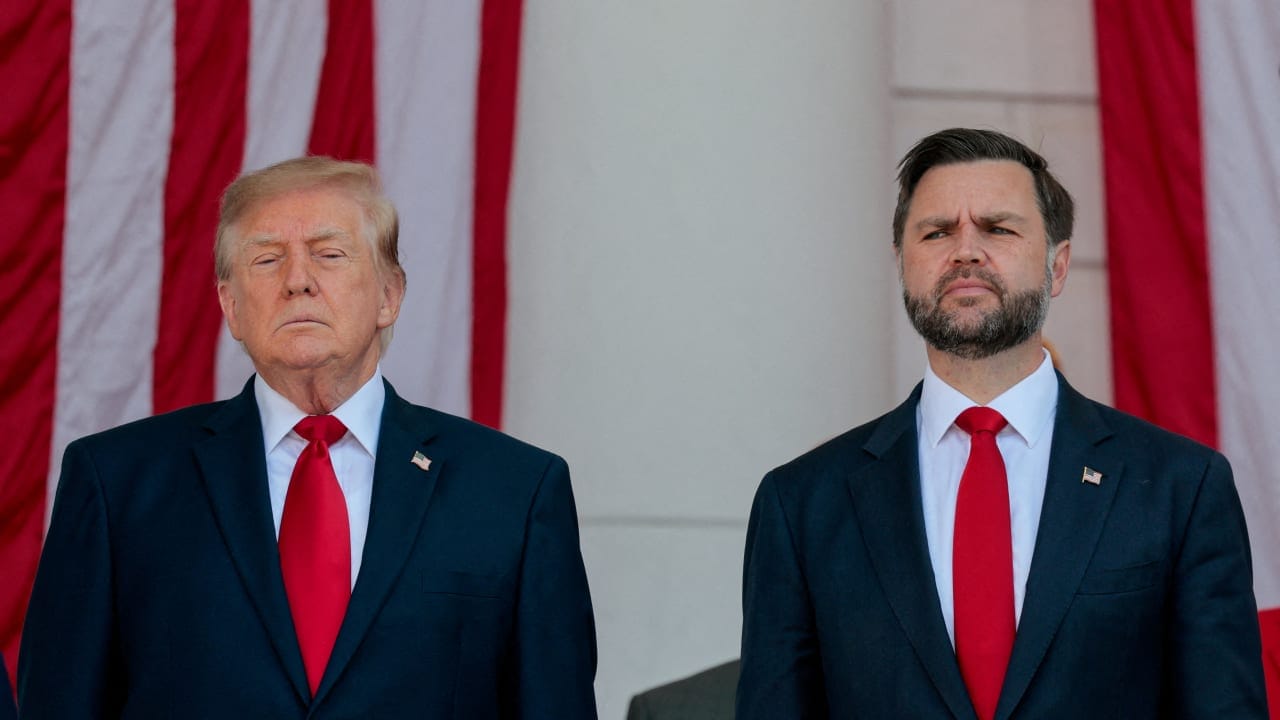
For months, the halls of Washington have been thick with speculation regarding the administration’s ultimate goals in Iran. As the military campaign continues, whispers of a rift between President Donald J. Trump and Vice President JD Vance have circulated, fueled by the intense political stakes of the conflict. However, on March 3, 2025, the Vice President moved to dismantle those narratives entirely. In a direct rebuttal to the idea that he and the President were at odds, Vance was unequivocal. When asked about potential friction, he responded, "No, there’s no daylight, Laura," effectively signaling that the executive branch remains in lockstep regarding its strategy in the region.
At the heart of the administration’s foreign policy is a foundational campaign promise: the rejection of "forever wars." This term, which has become a rallying cry for the current administration, refers to the perception of open-ended, multi-decade military commitments that have historically drained American resources and political capital. By May 12, 2025, during an interview on Fox News, Vance articulated exactly what that commitment looks like in practice. He made it clear that the administration is not merely seeking a tactical victory, but a strategic exit. "We told the American people we would do no more forever wars," Vance stated, framing the current military actions not as the beginning of a new occupation, but as a necessary, limited intervention.

Former U.S. Vice President Mike Pence (under President Trump's first term) rejected the statement made by current U.S. Vice President Kamala Harris that the war with Iran was the reason for the Republicans' devastating defeat in the midterm elections, stating that the problem was not the start of the war, but rather that it was not brought to a conclusion. "It's not because President Trump started a war or entered into a conflict with Iran. The problem is that we stopped and didn't finish it," Pence said.
Perhaps the most significant aspect of the administration’s stance is the explicit timeline it has set for itself. In a political landscape often defined by vague objectives, the Vice President offered a concrete boundary for the American presence in Iran. "We are not going to allow this to become a 10- or 15-year commitment, or frankly, even a two-year commitment," Vance declared. By setting such a short, aggressive horizon, the administration is attempting to insulate itself from the criticism that often follows prolonged military operations. The message is clear: the goal is to conclude the conflict well before the current term expires.
The Iranian nuclear program remains, in the eyes of the White House, a direct threat to the United States.
While the administration is committed to avoiding a protracted war, it maintains that the military campaign is a response to a genuine national security crisis. The Iranian nuclear program remains, in the eyes of the White House, a direct threat to the United States. Vance has defended the administration's strikes on this program as a necessary measure to ensure American safety. This creates a delicate balancing act: the administration must project enough military force to neutralize the nuclear threat, while simultaneously ensuring that the intensity of that force does not inadvertently lock the United States into a long-term, unsustainable military occupation.

Leland Vittert says Trump pulling JD Vance off Iran talks is "worse than firing him, similar to Biden making Kamala Harris the border czar." Trump: "We don't need a deal with Iran. Those days have long since passed." https://t.co/MWJuaBGLdb
Throughout his recent public comments, the Vice President has been quick to identify the forces he believes are pushing for a more aggressive, indefinite posture. He has pointedly criticized neoconservatives and foreign policy advocates who, in his view, desire a permanent American footprint in the region. Vance’s rhetoric suggests that the administration views these voices as a political obstacle to fulfilling their core campaign mandate. "My prediction is that whatever the president ultimately decides to do, there are going to be people who demand more, who want the war to go on indefinitely," he noted, positioning the administration as a bulwark against the influence of those who favor endless intervention.
As the administration navigates these domestic and regional pressures, the international context is shifting rapidly. The focus on Iran is occurring just as the global order prepares for a high-stakes summit in Shenzhen, scheduled for November 19. This meeting, confirmed by China’s Foreign Ministry, will bring together President Trump, Chinese President Xi Jinping, and Russian President Vladimir Putin. While the administration continues to weigh its options for resolving the Iranian conflict, this upcoming summit adds a layer of geopolitical complexity, as the world watches to see how the President’s "no forever war" doctrine will be received by other major powers on the global stage.