
For the millions who live in the satellite cities and work in the heart of the capital, the daily commute has long been a test of endurance. The stretch between Delhi and Meerut is more than just a distance; it is a daily negotiation with traffic, time, and the sheer exhaustion of transit. But a new rhythm is coming to the tracks. Starting Monday, November 16, 2026, the National Capital Region Transport Corporation (NCRTC) will launch a specialized service designed to turn a grueling trek into a swift, predictable sprint.

The initiative centers on the introduction of eight new fast Namo Bharat trains operating on the Delhi-Meerut corridor. These are not merely additional carriages on the line; they are strategic interventions designed to target the most punishing hours of the day. By focusing on peak morning and evening windows, the NCRTC is attempting to solve the specific problem of the commuter's most precious resource: time. These fast services will run in addition to the existing regular schedule, providing a high-speed alternative for those who need to move between the metropolitan core and the expanding outskirts without the delay of every local stop.
To achieve these new speeds, the trains will bypass much of the traditional stop-and-start pattern of regional transit. Instead of a slow crawl through every station, these fast trains will stop at only five key hubs: Sarai Kale Khan, Anand Vihar, Ghaziabad, Begumpur, and Modipuram. This selective approach changes the very math of the journey. Under this new model, the trip from Anand Vihar to Ghaziabad will take a mere 8 minutes. The leg from Ghaziabad to Begumpur will take 28 minutes, meaning the total transit from Anand Vihar to Begumpur will be completed in just 36 minutes. When looking at the corridor as a whole, the entire traversal is expected to fall under the 50-minute mark.
In the mornings, two fast trains will depart from each terminal at 8:00 AM and 8:30 AM.
Precision is the cornerstone of this new service. The NCRTC has mapped out a specific departure schedule to catch the ebb and flow of the workforce. In the mornings, two fast trains will depart from each terminal at 8:00 AM and 8:30 AM. As the workday ends, the momentum shifts to the evening, with two more departures scheduled for 6:00 PM and 6:30 PM. This structured cadence is intended to provide a reliable backbone for the daily migration of people, offering a sense of certainty that traditional road travel often lacks.
The timing of this expansion is significant, coming on the heels of a massive surge in ridership. The corridor recently crossed the 5 crore passenger journey milestone. This isn't just a theoretical success; the numbers reflect a profound shift in how people move through the region. The corridor currently supports approximately 1.1 lakh daily passengers, and the momentum has been accelerating, with an average of 32 lakh journeys recorded over the last three months.

Future of Indian transit: The 160 km/h Namo Bharat RRTS train blasts past a Meerut Metro station in seconds. https://t.co/7ADo1c3JPi
While the reduction in minutes is the most visible benefit, the implications of the fast Namo Bharat service extend beyond the individual passenger's schedule. By making rail transit significantly more competitive with private vehicles, the NCRTC is positioning the corridor as a tool for broader environmental and social goals. The move is intended to encourage the use of public transport, which in turn serves as a critical lever in the effort to reduce air pollution in the heavily populated National Capital Region.
As the November 16 launch approaches, the Delhi-Meerut corridor stands at a turning point. What was once a journey defined by distance is being redefined by efficiency. By bridging the gap between the urban center and the growing suburbs with a sub-50-minute transit time, the NCRTC is not just moving people; it is reshaping the economic and environmental geography of the region, one fast-track journey at a time.
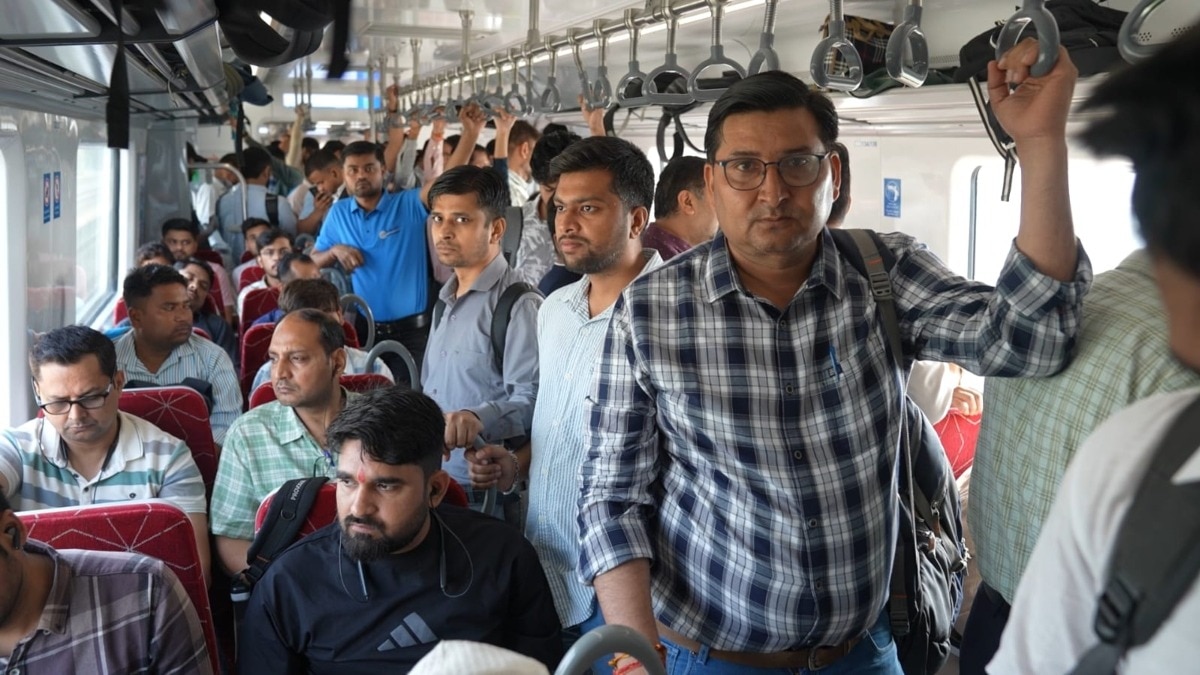

STORY | NCRTC to introduce fast Namo Bharat trains from Nov 16, Anand Vihar-Ghaziabad in 8 minutes The National Capital Region Transport Corporation (NCRTC) will introduce eight additional fast Namo Bharat train services during morning and evening peak hours from November 16, reducing travel time between Anand Vihar and Ghaziabad to just eight minutes, officials said. The limited-stop trains will operate on the Delhi-Meerut corridor, covering Anand Vihar to Begumpul in 36 minutes and Ghaziabad to Begumpul in 28 minutes. The entire corridor will be covered in less than 50 minutes, NCRTC said. The fast services will stop at only five stations -- Sarai Kale Khan, Anand Vihar, Ghaziabad, Begumpul and Modipuram -- to reduce travel time for commuters, particularly office-goers and students travelling during rush hours, it said. During morning peak hours, two trains in each direction will depart from Sarai Kale Khan and Modipuram at 8 am and 8.30 am. In the evening, the additional services will depart from both terminal stations at 6 pm and 6.30 pm. READ: https://t.co/GE6agCpm1L