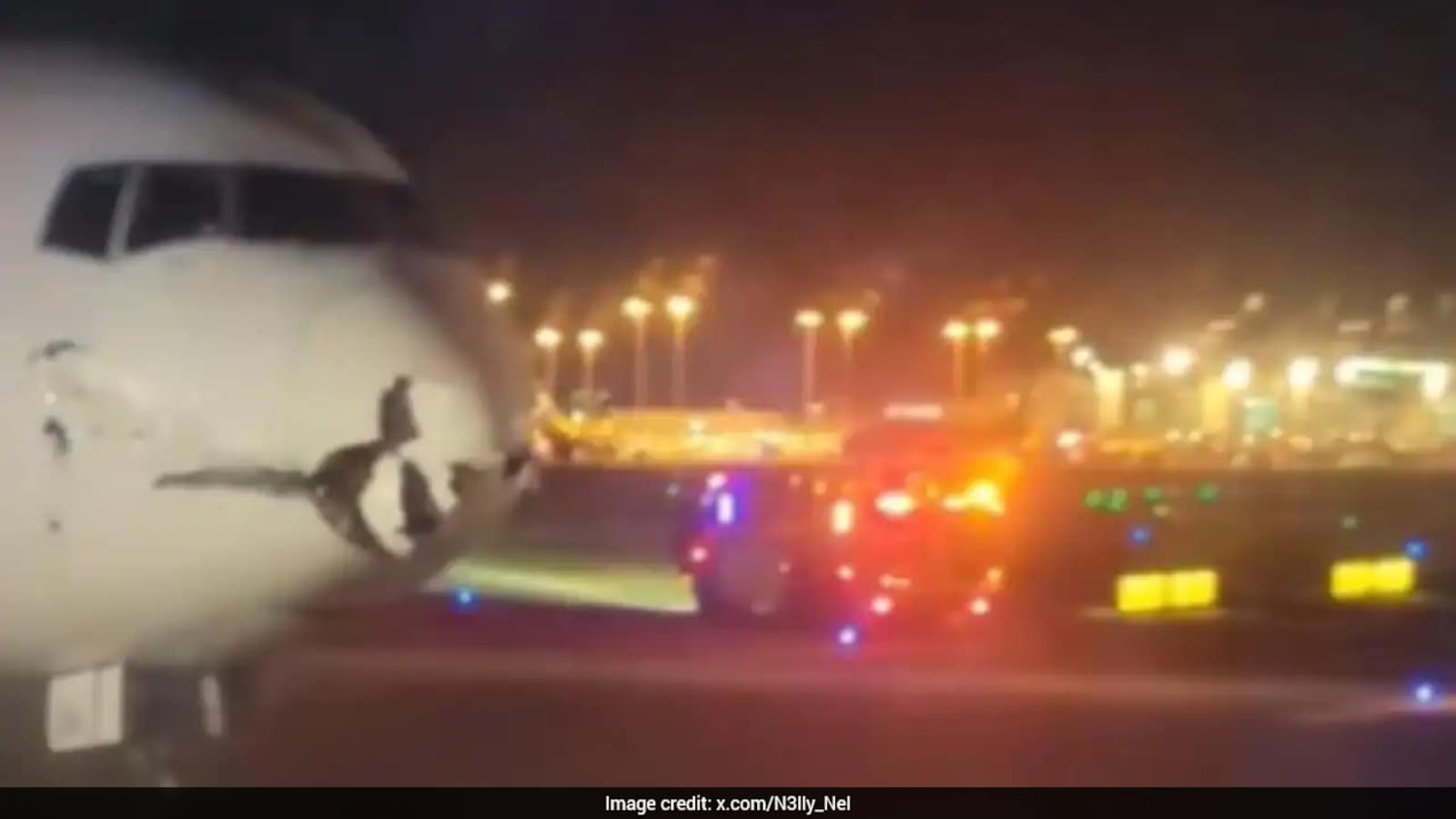
They were settling in, preparing for landing at one of the busiest gateways in the United States. The ground operations of a major international hub are usually a silent, choreographed ballet of engines spooling up and wheels rolling onto tarmac. But at 9:15 pm on Saturday, November 14, that choreography stumbled. The physical impact was immediate. The front of the UPS cargo plane and the tip of the Copa jet’s wing were damaged in the collision.

In the cockpit of the Copa Airlines jet, the reality of the crash registered not with a siren, but with a sudden, violent jolt. A passenger later described the moment as one of sheer panic, the aircraft shuddering in a way that is foreign to commercial travel. Within seconds, the calm of the cabin was replaced by the urgent commands of the crew, who intervened to secure the aircraft and manage the fear of the passengers. The two individuals who sustained minor injuries in the collision were treated on the spot by airport medical staff, requiring first aid rather than hospitalization.

UPS cargo plane collides with commercial airliner at Miami airport https://t.co/HpWAF2F2tf https://t.co/IWMWRhK4JN
Perhaps the most revealing aspect of the incident was the raw, unedited audio from air traffic control, which captured the pilots' reactions in the immediate aftermath. The exchange stripped away the formalities of the cockpit and revealed the stark realization of error. The UPS pilot acknowledged the mistake with startling directness: "Yeah, we went too far, and then he, he clipped us with the wing." The Copa Airlines pilot responded with the clinical detachment of a professional assessing structural integrity, noting, "It seems that we are missing the left wingtip." This brief conversation highlights the complexity of ground traffic, where two large aircraft share limited space. The physical contact was the result of that margin being closed, a momentary lapse in spatial awareness on the tarmac.
The UPS pilot acknowledged the mistake with startling directness: "Yeah, we went too far, and then he, he clipped us with the wing.
The Federal Aviation Administration (FAA) launched an immediate investigation into the collision, aiming to determine exactly how the two aircraft came into contact on the taxiway. Airport operations at Miami International continued without interruption, using alternative taxiways to keep the flow of air traffic moving. This continuity is a testament to the redundancy built into major hubs; one closed path rarely stops the airport, but it does force a hard look at why the path was shared. Both UPS and the airport officials confirmed their full cooperation with the FAA, emphasizing that the safety of their workers and the public was their highest priority.

NEW: UPS Boeing 767-300F collides with a Copa Airlines Boeing 737-800 during taxi at Miami Airport. The Federal Aviation Administration said the wingtip of a Copa Airlines Boeing 737 struck the nose of a UPS Boeing 767 while both aircraft were taxiing around 9 p.m. local time. Air traffic controllers had instructed the UPS crew to give way to the Copa Airlines flight, which was heading to its gate after landing, while the UPS cargo plane was preparing to depart for Bogotá, Colombia, according to the FAA. https://t.co/JzgaZCTZWm
Behind the technicalities of wingtips and noses, there are human stories. For the two people who were injured, the evening likely ended not in a hotel in Miami, but in a medical bay. For the UPS crew, the incident is a significant professional event, a moment where their training on taxiway clearance and communication with air traffic control is being scrutinized. The incident underscores that even as aircraft become more advanced, the ground remains the most complex environment for pilots, where a simple misunderstanding of position can lead to a collision.
The collision between the Copa Boeing 737 and the UPS Boeing 767 is not just a story of metal on metal; it is a story of two professions operating in close quarters. The fact that the FAA is investigating suggests a deeper look into whether this was a one-time error or a systemic issue in how taxiway priority is managed at busy hubs like Miami. For now, the planes sit in repair, and the passengers are home. The incident serves as a stark reminder that in aviation, safety is not just about the sky; it is about the very concrete under the wheels, where the margins for error are thin and the consequences are immediate.

Two planes collided while taxiing at Miami International Airport on Saturday night, leaving two people with minor injuries. A Copa Airlines Boeing 737 struck the nose of a UPS Boeing 767 with its wingtip. The FAA is investigating the collision, which occurred a day after a nationwide flight grounding disrupted U.S. air travel. Source: CNN