
On November 8, 2026, the air in Florida, Uruguay, carried a weight that felt both spiritual and urgent. An outdoor mass, sprawling across the landscape, drew an estimated 50,000 people into a singular moment of devotion. At the center of this gathering was Pope Leo XIV, a man whose presence was marked by a quiet, visible resilience. Only three weeks prior, the Pontiff had undergone surgery for lung cancer, yet he stood before the crowd, participating in the liturgy with a strength that seemed to mirror the gravity of his message.

Uruguay presents a unique backdrop for such a gathering. Within the broader tapestry of Latin America, the nation stands out as the most secular, a place where the traditional grip of the Church has loosened significantly. Today, only 35 percent of the Uruguayan population identifies as Catholic. In a country where religious affiliation is no longer the default setting for social life, the sheer scale of the crowd in Florida—thousands of faithful gathered under the open sky—spoke to a persistent, if evolving, connection to the papacy.
But the Pope’s visit was not merely a pastoral tour of a secular state; it arrived against the backdrop of a harrowing regional crisis. The numbers emerging from Latin America and the Caribbean tell a story of systemic violence. In 2024, more than 3,800 women fell victim to gender-based violent deaths. To understand the scale of this tragedy, one must look at the daily rhythm of the region: on average, 11 women are killed every single day for reasons tied to their gender. It is a crisis that transcends borders, turning domestic and social spaces into sites of profound loss.
It was into this atmosphere of mourning and tension that Pope Leo XIV directed his words.
It was into this atmosphere of mourning and tension that Pope Leo XIV directed his words. He did not speak in abstractions or distant theological debates. Instead, he turned his gaze toward the men in the congregation, addressing them with a specificity that felt both personal and instructional. "Dear fathers and grandfathers," he told the assembly, "the young need to see you pray, to see you approach the sacraments, to see you treat your wives with respect."
By linking the spiritual health of the family to the physical safety and dignity of women, the Pope addressed the root of the violence. He framed respect not as a suggestion, but as a foundational requirement for the men who serve as the pillars of their households and the examples for the next generation.
For those in attendance, the Pope's arrival was more than a religious event; it was a validation of their community's identity. Ivanna Fisichella noted the significance of the moment, observing that the Pope's visit is very important because it strengthens the presence of the Church within the country. In a nation where the Catholic identity is a minority, the physical presence of the Pontiff serves as a reminder of a spiritual lineage that continues to pulse through the population.
The emotional resonance of the visit was palpable among the faithful. As the Pope moved through the crowd, the response was visceral. "Pope Leo, we love you very much!" the crowd cried out, a collective expression of affection for a leader who, despite his recent health struggles, had traveled to their shores. For individuals like Evangelina Campero, the significance lay in the physical and spiritual labor of the journey itself, noting "the effort the pope makes" to be present with them.
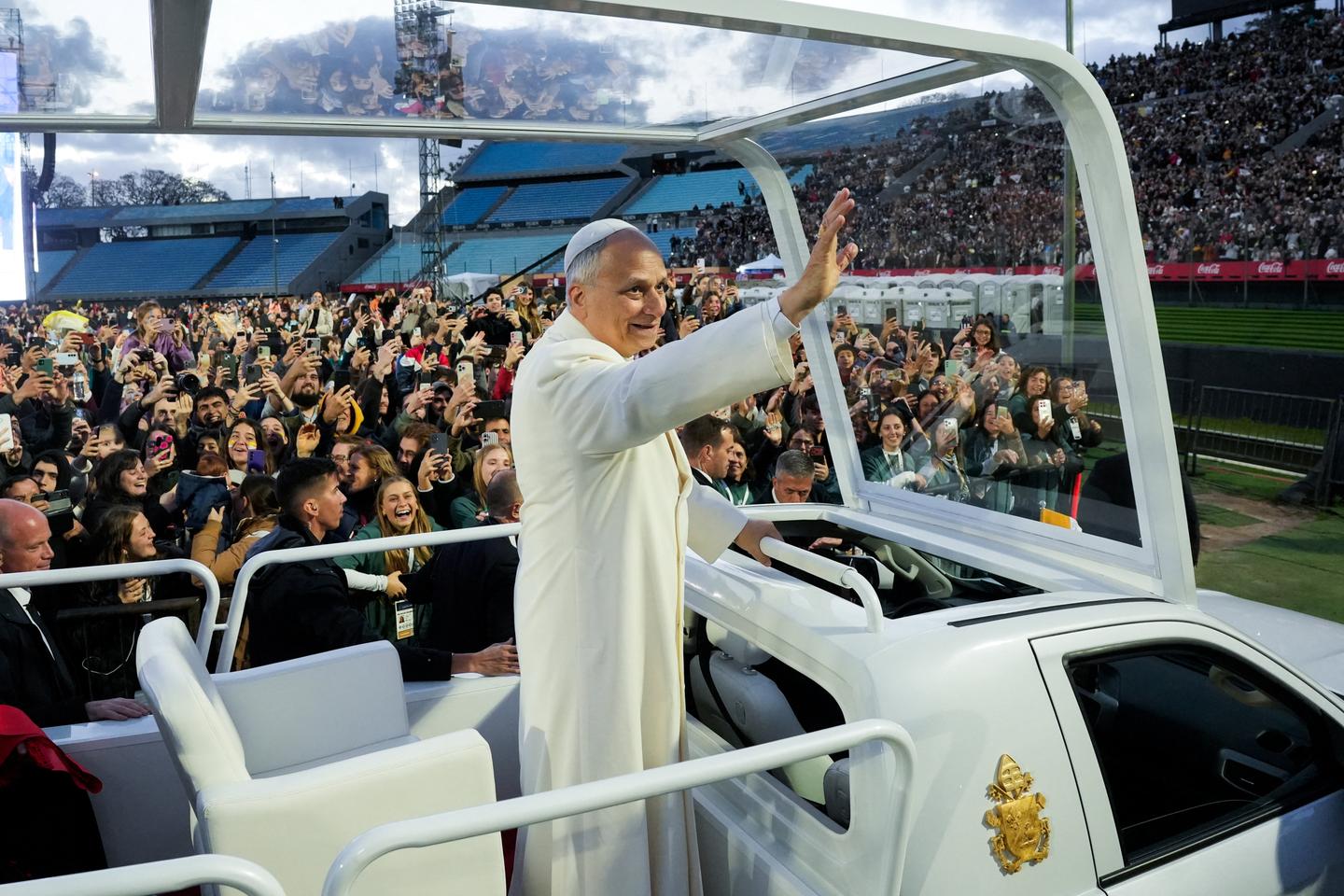
Uruguay is but one stop on a wider pilgrimage. The Pope’s tour is a movement through the heart of the continent, continuing toward Argentina and Peru—territories where he previously resided. This journey is a long one, intended to touch various corners of the region before it finally concludes in November. Each stop carries the weight of the previous one, as the message of respect and the reality of the regional violence continue to intersect.
As the procession moves onward, the central tension remains. The Pope has laid out a moral imperative for men in a region where the statistics of gender-based violence remain devastatingly high. Whether a call for respect can shift the cultural currents that lead to 11 deaths a day is a question that remains unanswered, even as the faithful continue to follow the path of a leader who has come to them in their most secular hour.