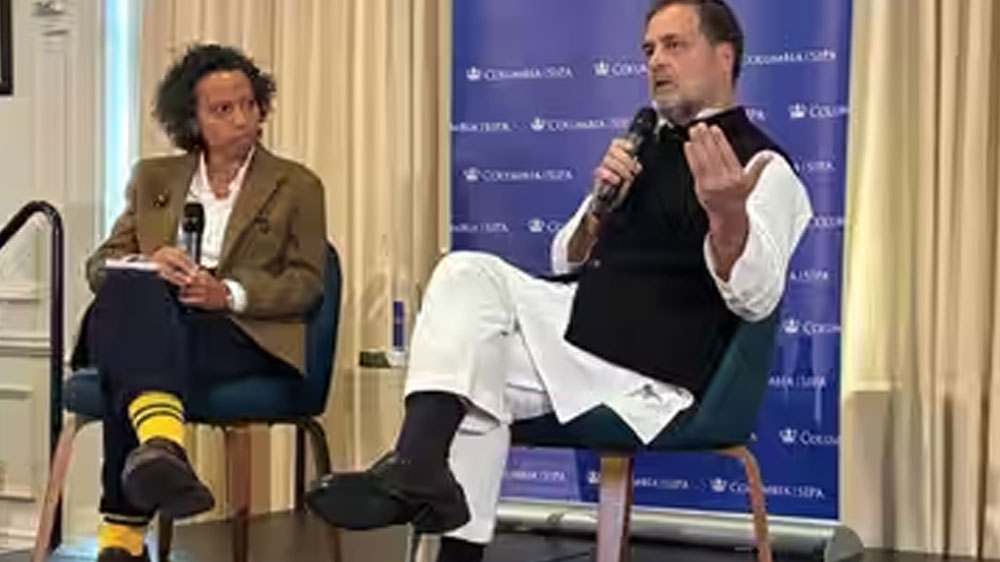
For a brief two-day window, the center of Indian political discourse shifted thousands of miles away to the halls of Columbia University in New York. It was here that Rahul Gandhi, the Leader of the Opposition, chose to deliver a stark assessment of his home country’s current state. To an audience far removed from the daily grind of New Delhi, Gandhi did not mince words. He framed the current Indian landscape not as a rising power, but as a nation teetering on the edge of a significant structural collapse. His visit, while brief, served as a platform to amplify concerns that he argues are being systematically ignored by the domestic media and the government alike.
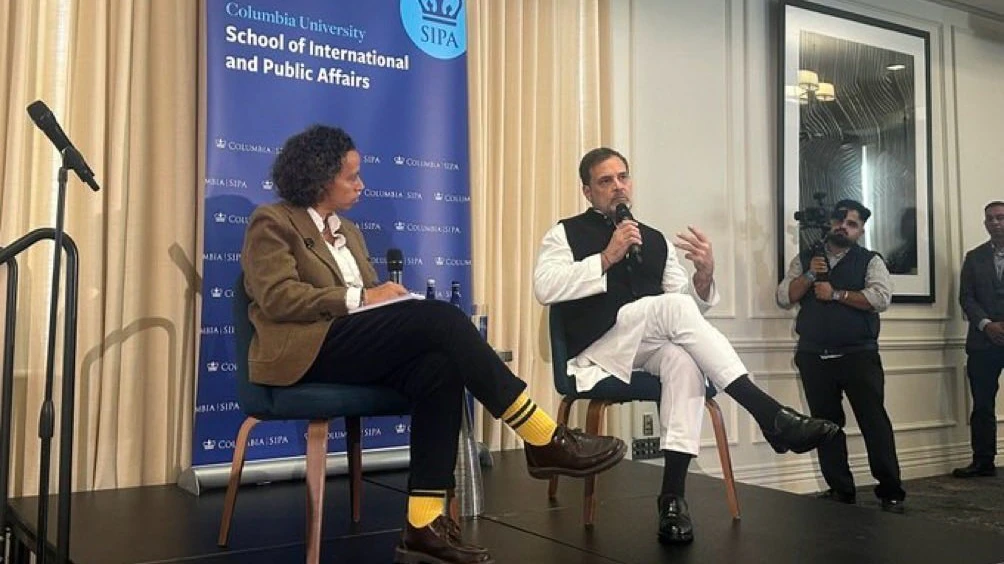
At the heart of Gandhi’s address was a blunt, unvarnished warning: "The blunt thing is that India is sitting on an economic disaster. That's the reality." For Gandhi, this is not merely a political talking point but an impending catastrophe characterized by two primary failures: a massive unemployment crisis and an education system that he claims is failing to prepare the next generation. He argued that the disconnect between the government’s narrative and the lived experience of the average citizen is widening, creating a volatile environment where the middle class feels increasingly abandoned.
Gandhi’s focus on the youth was particularly pointed. He suggested that the frustration simmering among young Indians is a direct result of a lack of viable career paths. "We've been studying this, we've been looking into this, and the reason is very interesting, which is that the crux of it is they do not see a future for themselves," he explained. This sentiment of hopelessness, he argued, is the fuel for the economic instability he predicts. By highlighting the inability of the current system to provide for its most ambitious citizens, Gandhi sought to shift the conversation from macroeconomic statistics to the personal anxieties of the Indian electorate.
As the words spoken in New York traveled back to India, the response from the ruling Bharatiya Janata Party (BJP) was swift and condemnatory.
Beyond the economy, Gandhi leveled a serious charge against the integrity of the democratic process itself. He pointed to the 2024 election year, alleging that a staggering "140 million people who would have voted in 2024 have been removed from the electoral roll." This claim, which he used to challenge the validity of the electoral process, has added a layer of institutional distrust to his critique. He posed a direct question to the Election Commission: "How can an election be considered valid under these circumstances?" For its part, the Election Commission has rejected these allegations of wrongdoing, maintaining that the voter-roll revision process was conducted according to established protocols.
As the words spoken in New York traveled back to India, the response from the ruling Bharatiya Janata Party (BJP) was swift and condemnatory. The party viewed Gandhi’s remarks not as a legitimate critique, but as a calculated effort to undermine the nation’s image on the global stage. Pradeep Bhandari, representing the party’s stance, did not hold back in his assessment of the Opposition leader’s motivations: "His inherent hate for India's progress and Indian democracy makes him speak ill about India every time he goes abroad!" This characterization of Gandhi as a purveyor of anti-India propaganda highlights the deep polarization that defines the current political climate.
While Gandhi was articulating his warnings in the United States, the broader global stage was occupied by other significant events involving India’s leadership. In the Philippines, Prime Minister Narendra Modi was engaged in a summit with Quad leaders, including U.S. President Donald Trump, signaling a focus on international strategic partnerships. Simultaneously, the Prince and Princess of Wales were in Mumbai, casting a spotlight on the Earthshot Prize winners. These concurrent events underscore the complexity of India’s current position: a nation simultaneously projecting strength through international diplomacy and grappling with internal debates over its economic and democratic health. As the dust settles on this latest exchange, the divide between the government’s vision of progress and the Opposition’s warnings of disaster remains as wide as ever.