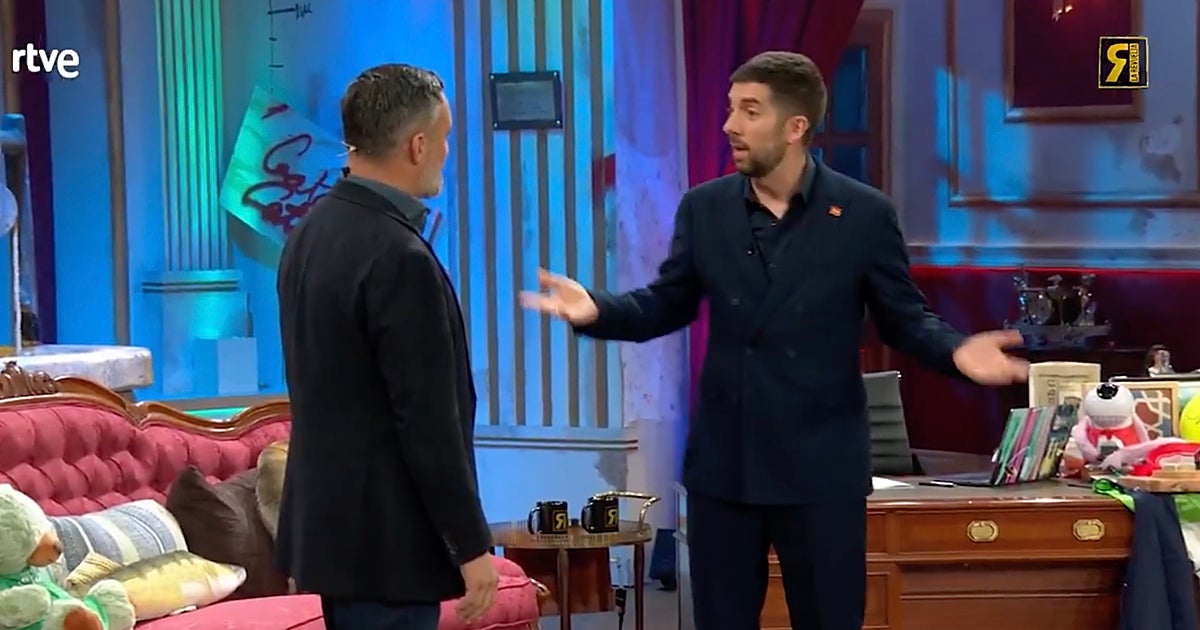
The campaign period was underway, leading up to the November 29 general election. Santiago Abascal, the leader of the far-right Vox party, found himself not on a podium with microphones held by party loyalists, but in the studio of La Revuelta, a late-night satirical show hosted by comedian and journalist David Broncano. The setting was the Teatro Albéniz in Madrid, and the stakes, as the evening wore on, would feel less like entertainment and more like a constitutional crisis of the public square. Abascal sat across from Broncano, a figure known for his sharp, left-leaning humor, and the dynamic was immediately charged. This was not a standard interview; it was a controlled clash between a politician and a comedian, each trying to define the other to a studio audience that was, for the first time, split between the show's usual external guests and a specific invitation for Vox supporters.
The friction began over vocabulary. Broncano had asked Abascal to drop the label he had attached to Prime Minister Pedro Sánchez, a term Abascal had repeated in recent weeks. When pressed to stop, Abascal did not flinch. "Sánchez is a dictator and I will not retract it," he stated, his voice flat but firm. He elaborated, describing the prime minister as "an apprentice tyrant," adding that the only thing currently containing this figure were the institutions of the state. For Abascal, the argument was legalistic and moral: he pointed to the corruption cases at the top of the Socialists' Party (PSOE), specifically citing the imprisonment of José Luis Ábalos, a former Transport Minister who had become a symbol of the government's alleged moral decay. "This government is the number one enemy of the public interest," Abascal argued, framing his party as the sole check against a slippery slope into authoritarianism. To him, the term 'dictator' was not hyperbole but a necessary diagnostic tool for a party that viewed the executive branch as illegitimate in its current form.
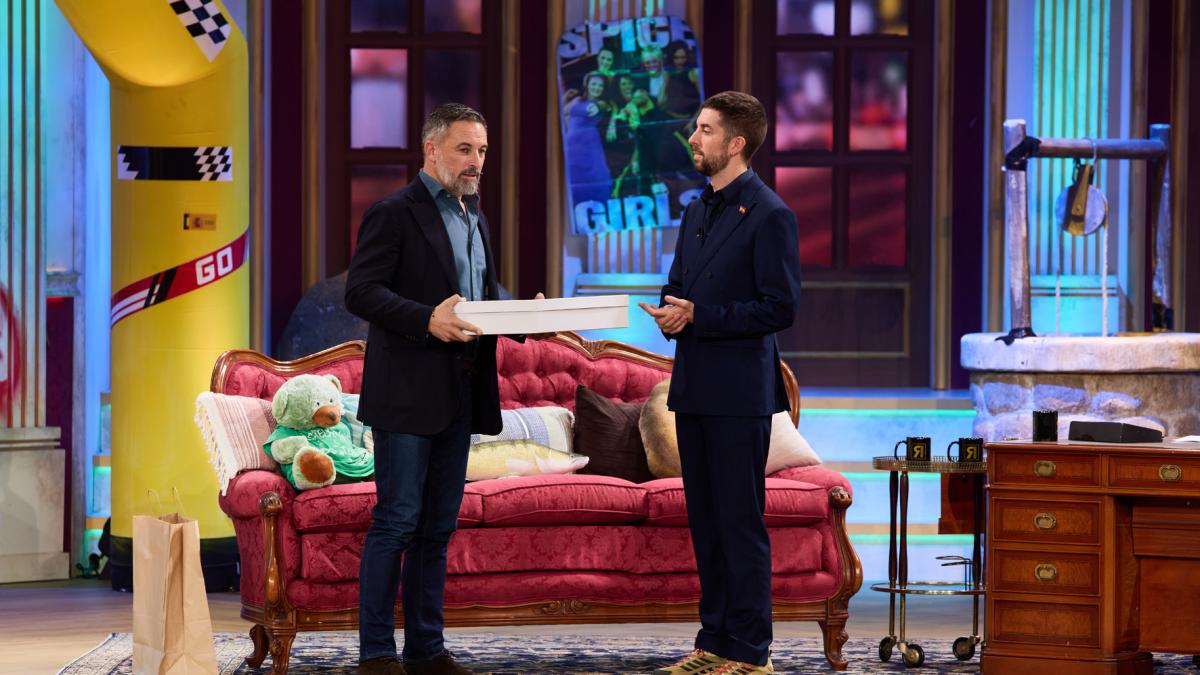
Amidst the political weight, Abascal attempted to lighten the mood with a gift and a joke. He presented Broncano with a small flag of Ceuta, a Spanish city on the North African coast. For Abascal, the flag was a symbol of national sovereignty, a quiet rebuttal to separatist narratives. He then noted that others had suggested he bring a stone, a flamethrower, or even an empty box to the set. The humor was a deflection, a way to acknowledge the hostility lurking in the corners of the internet and the press. He also addressed the censorship narrative that had surrounded his appearance, noting the pressure he had received from cultural figures like Pedro Almodóvar, who had lobbied for his ban. "I know you have received pressure for interviewing me, and that many have told you that you gave voice to fascism," Abascal said, reframing the criticism as evidence of a one-sided media landscape that, in his view, did not sympathize with Vox when it was "aggressed with stones in the street."
He remarked at the end of the segment that he regretted allowing the Vox supporters to be invited, arguing that their applause "whitewashed" the party's views.
The room, however, was not a neutral container. As the interview progressed, segments of the audience began to applaud Abascal, a sound that cut through the satire and the political rhetoric. For Broncano, whose show relies on a specific social contract with its viewers, the applause was a breach. He remarked at the end of the segment that he regretted allowing the Vox supporters to be invited, arguing that their applause "whitewashed" the party's views. In his mind, the validation of the crowd neutralized the critical edge of his questions. The reaction in the studio was immediate and divided. Some attendees, who had come to support Abascal, felt that Broncano was unjust and not neutral. Others questioned why a right-wing supporter's presence should be a crime, noting that they, too, deserved representation on public television. The moment captured the deeper anxiety of the Spanish left: the fear that the center of gravity was shifting, and that satirical comedy, once the guardian of the secular consensus, was losing the ability to mock without being mocked back.
In the afterglow of the taping, the narratives hardened into opposing camps. For the vocal supporters in the studio, Abascal was the victim of an elitist setup. "I left very angry. I thought Broncano's interview was unfair," one woman said. Another described Abascal as "a super polite man who behaved perfectly," adding that she would stop watching the program because Broncano had enraged her so much. "This man, in turn, gained a follower," she added, suggesting that the controversy had paradoxically increased Abascal's appeal among her peers. On the other side, Broncano's position was that neutrality was a myth; by inviting the opposition's base, he had compromised the integrity of the show. The episode became a microcosm of the election campaign itself: a debate not just about policy, but about who gets to define the terms of the argument, and whether a comedian on a public channel can be expected to remain impartial when his own ideology is one of the parties in the contest.
The incident at the Teatro Albéniz forces a broader question about the role of satire in polarized politics. Is a late-night show a neutral arena where all views are tested, or is it a curated space that reflects the host's worldview? Broncano's regret, vocalized on air