
On a Friday that should have been defined by the routine rhythms of a school week, a stretch of road in eastern France became the site of a sudden and devastating tragedy. In the commune of Lan, a long, straight road—the kind of stretch that often invites a sense of momentum—became the scene of a violent collision. An intercity bus, carrying a group of students from various middle and high schools, veered from its path and struck a tree. The impact was sudden, turning a routine journey into a scene of chaos and emergency response.
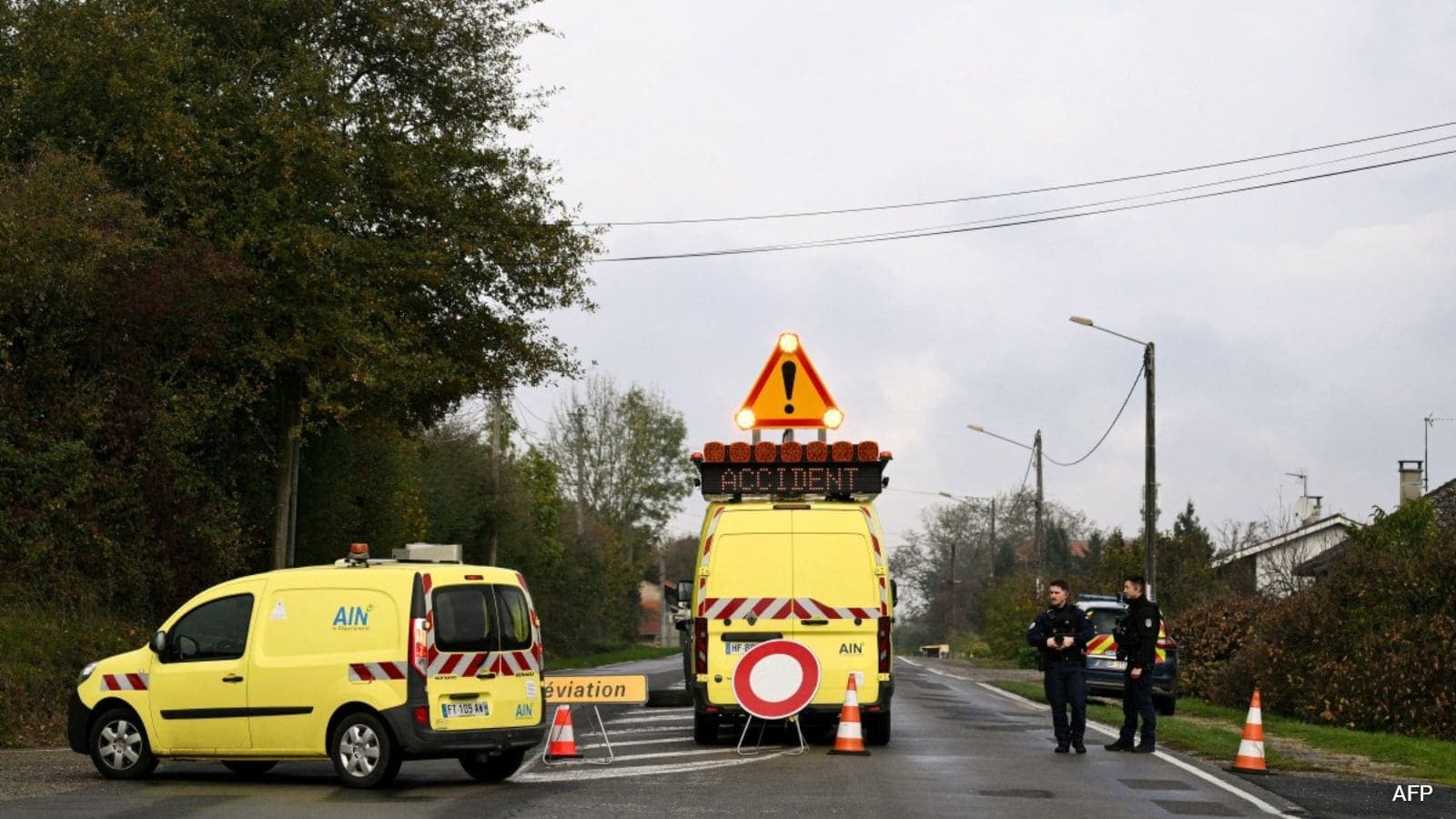
The immediate aftermath of the crash revealed a grim reality for the passengers on board. The collision claimed the lives of two people: one minor and one young adult. For the families of these students, the transition from a normal school morning to a state of mourning was instantaneous. Beyond the fatalities, the physical toll on the other passengers was significant. Sixteen individuals were injured in the accident, a number that underscores the violence of the impact against the tree.
While many of the sixteen injured were treated for various wounds, the severity of the accident was most acutely felt by those in the highest tier of medical urgency. Among the casualties, three individuals were reported to be in critical condition. These serious injuries represent the most precarious aspect of the accident, as medical teams worked to stabilize those most deeply affected by the crash. The distinction between the general injuries and these three critical cases highlights the unpredictable and varying levels of trauma that occur when a heavy vehicle leaves the roadway.
As news of the crash spread, the response from the French government was swift.
As news of the crash spread, the response from the French government was swift. The accident occurred near the small town of Lent, in a rural area. In such regions, the geography often consists of long, straight passages that can be deceptive to drivers, and the rural setting meant that emergency services had to mobilize quickly to reach the site of the collision. The scale of the incident drew immediate attention from the highest levels of the state, as officials moved to address both the human tragedy and the logistical necessity of the investigation.
In the wake of the crash, the weight of the loss was acknowledged by those tasked with the nation's transport and education sectors. The emotional gravity of the event was captured by Edouard Geffray, who spoke to the collective grief felt by the state. "My thoughts, and those of the government and the entire education community, are with the families," Geffray stated, acknowledging the profound disruption caused to the families of the minor and the young adult who perished.
Transport Minister Philippe Tabarot also moved to address the crisis directly, traveling toward the rural site to oversee the situation as it unfolded. The gravity of the event was reflected in his own description of the unfolding disaster. "I was heading to the site following a serious bus accident near the small town of Lent, in a rural area," Tabarot noted, emphasizing the seriousness of the collision in that specific geographic context.
As the initial shock subsides, the focus of the authorities has shifted toward understanding exactly how a bus carrying students could leave the road and strike a tree. Emergency services and local authorities have launched an investigation into the accident. This process is essential to determining the mechanics of the crash—whether it was a matter of vehicle failure, road conditions, or other factors—as they work to piece together the moments leading up to the collision on that Friday.
For now, the commune of Lan and the surrounding area remain under the shadow of this accident. The investigation continues, the three critically injured passengers remain under medical care, and the families of the two deceased continue to navigate an unimaginable loss. What was once a standard route for students traveling to middle and high school has been transformed into a site of mourning and intense scrutiny.