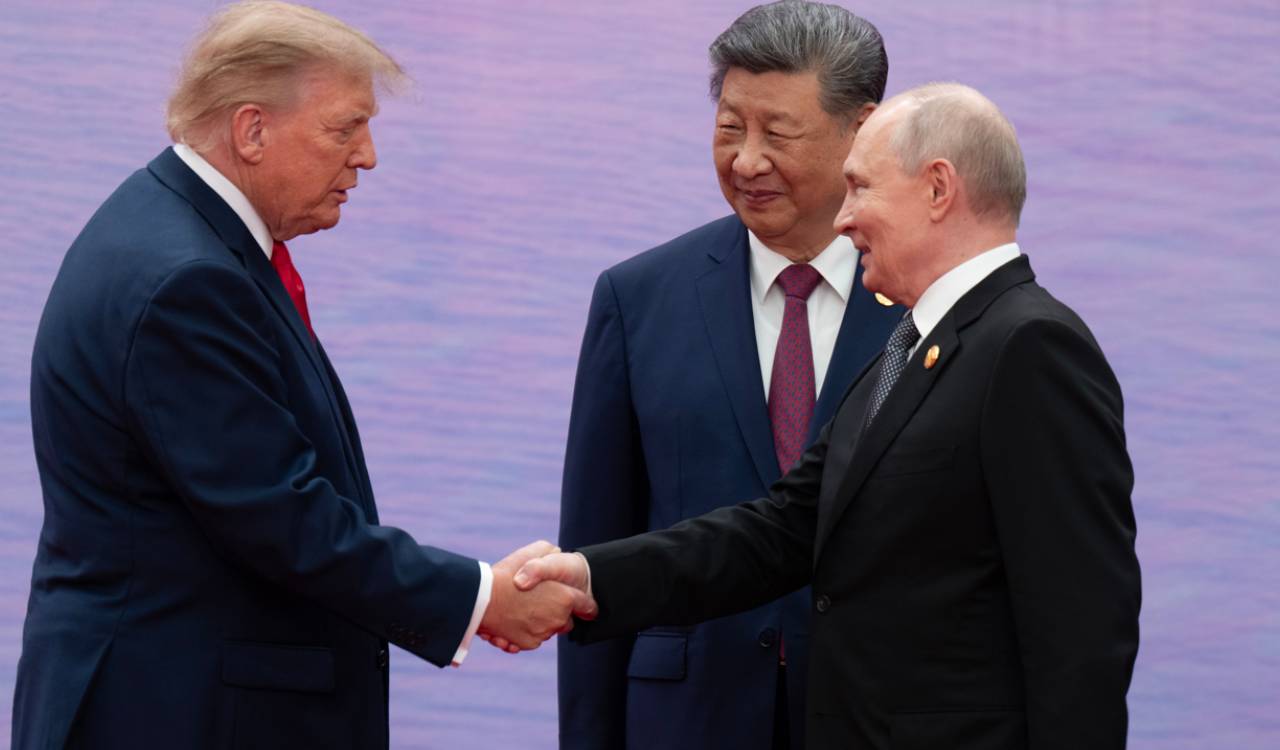
In the bustling tech hub of Shenzhen, China, a diplomatic gathering of unprecedented proportions is set to unfold. On November 19, 2026, U.S. President Donald Trump will sit down with Chinese President Xi Jinping and Russian President Vladimir Putin for a trilateral summit. This meeting, occurring immediately following the Asia-Pacific Economic Cooperation Summit, represents a rare moment when the leaders of the world's three most powerful nuclear nations converge in one place. The summit aims to address pressing global concerns, particularly nuclear arms control and the ongoing conflicts in Ukraine and Iran.

Trump, known for his dealmaking prowess, views this meeting as a significant opportunity to demonstrate his diplomatic skills. The U.S. president has made clear his intentions regarding nuclear discussions, stating, "I want to talk to the leaders about their nuclear stockpiles." This summit marks Trump's third substantial meeting with Xi Jinping this year, indicating the importance both leaders place on direct dialogue despite their nations' complex relationship.

⚡️What China hopes to gain from the Trump-Putin summit. Chinese leader Xi Jinping, Russian President Vladimir Putin, and U.S. President Donald Trump are set to meet in the Chinese city of Shenzhen on Nov. 18 for closely watched trilateral talks. https://t.co/gWtQQ9N7o7
While the trilateral format brings all three leaders together, the summit will also feature crucial one-on-one meetings. Trump will hold separate discussions with both Xi and Putin, allowing for more focused conversations on bilateral issues that might not be suitable for the larger group setting. These private sessions could prove particularly valuable as the leaders navigate the delicate balance between cooperation and competition.
Adding an intriguing dimension to the diplomatic proceedings is the reported presence of Elon Musk, who is traveling with Trump.
The backdrop for these nuclear discussions is sobering. The last major nuclear arms control pact between Russia and the United States, known as New START, expired in February 2025. This agreement had been the cornerstone of nuclear arms limitation between the two nations for years, and its expiration has left a significant void in global nonproliferation efforts. The absence of such a treaty makes the upcoming discussions in Shenzhen all the more critical.

“Who is he? He is my friend,” President Trump said as he entered the room to meet with Russian President Vladimir Putin on Thursday. The two leaders met in Shenzhen, China, ahead of their historic trilateral meeting with Chinese President Xi Jinping. https://t.co/Sq7v2MdTqV
Adding an intriguing dimension to the diplomatic proceedings is the reported presence of Elon Musk, who is traveling with Trump. The billionaire entrepreneur's involvement raises questions about the intersection of technology and diplomacy, particularly given recent developments involving his company SpaceX. Reports indicate that SpaceX has intermittently throttled the military-grade Starshield satellite system used by Ukraine for launching drones and intercepting hits from Russia.
Despite the high-level attention and diplomatic significance, experts remain cautious about the prospects for major breakthroughs. The complex geopolitical landscape, deep-seated mistrust between the nations, and the absence of a binding nuclear arms treaty create substantial hurdles. However, the mere fact that such a meeting is taking place represents a diplomatic achievement in itself, opening channels of communication that have been limited in recent years.

VIDEO | Explainer: Trump-Xi-Putin Meet - What could the rare Troika summit mean for the World and India? Three of the world's most powerful leaders. Three major nuclear powers. And a host of geopolitical fault lines. US President Donald Trump, Chinese President Xi Jinping and Russian President Vladimir Putin are set to meet for an unprecedented trilateral summit in China's Shenzhen on Thursday. What could this meeting mean for the world? The discussions are expected to cover some of the biggest global challenges, including the US-Israeli war against Iran, nuclear arms reduction, global trade and artificial intelligence. #DonaldTrump #XiJinping #Putin (Only for Use in India) (Source: AFP/PTI. EFE/PTI. White House YT. Rapid Response 47 X. Kremlin)
The Shenzhen summit serves as the culmination of Trump's Asia trip, which began in the Philippines. This positioning underscores the administration's focus on the Indo-Pacific region while simultaneously engaging with Russia on matters of global security. The sequence of meetings—from the Philippines to China and finally to this trilateral gathering—reflects a deliberate strategy to address regional and international concerns in a coordinated manner.

As the world watches, the leaders prepare to convene in Shenzhen, bringing together nations often at odds with one another. The summit represents both a potential opening for dialogue and a reminder of the persistent challenges in global diplomacy. Whether this meeting will yield concrete agreements or simply serve as a foundation for future negotiations remains to be seen, but the very fact that these three leaders are coming together underscores the interconnected nature of our global challenges and the continuing search for diplomatic solutions.