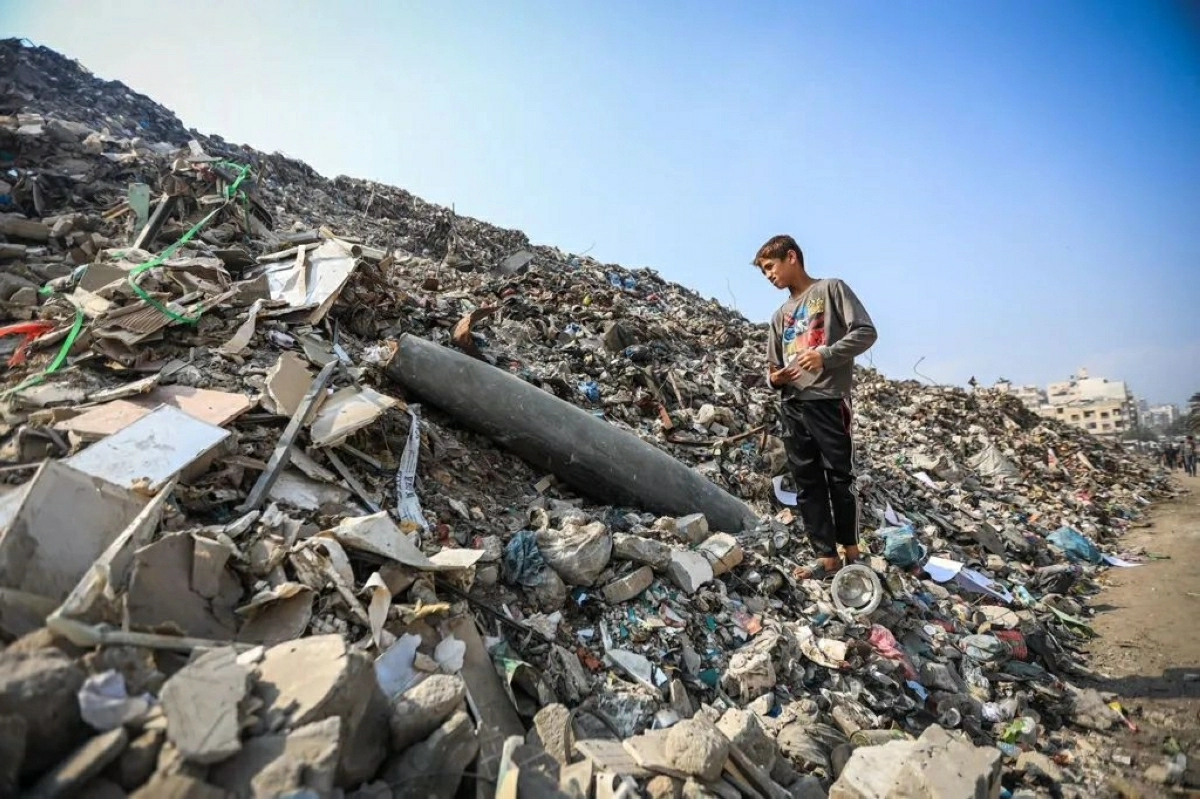
In the wake of Israel's military assault on Gaza, a devastating new reality has emerged: the territory has been fundamentally altered, with over 99% of its land now experiencing potential contamination of air, soil, and water. According to a joint report published Monday by Oxfam and the Conflict and Environment Observatory (CEOBS), the extensive use of explosive and incendiary weapons has affected 78% of Gaza's landmass, effectively turning the area into what researchers describe as a 'toxic wasteland' that will persist for decades.

The report paints a grim picture of environmental devastation on an unprecedented scale. As Amitabh Behar, Oxfam's executive director, stated: "The destruction and contamination of Gaza will have fundamentally degraded the environmental conditions necessary for human safety and survival." This contamination isn't merely a temporary inconvenience but a long-term crisis that threatens the very foundation of life in the already beleaguered territory.
The scale of this environmental destruction has raised serious questions about potential violations of international humanitarian law. The report's authors suggest that such extensive contamination may constitute war crimes, crimes against humanity, or even provide powerful evidence of genocide. The deliberate targeting of infrastructure and the widespread use of weapons that leave behind toxic residues represent a level of environmental harm that extends far beyond the immediate objectives of military operations.
This perspective frames the environmental damage as collateral damage in what Israel views as a necessary military operation against Hamas.
The contamination affects every aspect of life in Gaza. Water sources have been poisoned by chemicals from exploded munitions, agricultural land has been rendered barren by toxic substances, and the air quality has deteriorated significantly due to smoke and particulate matter from countless explosions. This multi-faceted contamination creates a public health crisis that will outlast any ceasefire agreement.
Israel has vehemently rejected the report's findings. The country's foreign ministry issued a statement dismissing the study as "shameful and scandalous," claiming that Oxfam had "traded its credibility for campaigning." Israeli officials argue that the destruction reflects Hamas's military infrastructure rather than indiscriminate targeting.
"The scale of destruction in Gaza reflects the scale of the terror network Hamas built there, including a 500+ kilometer tunnel system and weapons depots, inside and beneath civilian areas," the foreign ministry stated. This perspective frames the environmental damage as collateral damage in what Israel views as a necessary military operation against Hamas.
Compounding the environmental crisis is the apparent failure of international efforts to oversee reconstruction. The Trump-administration-backed Board of Peace, tasked with overseeing the ceasefire and reconstruction, is widely seen as ineffective, particularly as Israel refuses entry of heavy cleanup equipment, citing security concerns regarding Hamas. This refusal has left Gaza's contaminated sites untouched, prolonging the environmental crisis.
The Israeli military office has stated that cleanup efforts can only proceed "after Hamas fully disarms," creating a catch-22 situation where environmental remediation is tied to political conditions that remain unmet. This stance has frustrated international aid organizations and left Palestinians living amidst toxic remnants of the conflict with no clear path to environmental recovery.
As the report's authors warn, the environmental contamination in Gaza represents a crisis with generational consequences. The toxic substances left behind by the bombardment will continue to affect public health, agricultural productivity, and overall quality of life for years to come. Without immediate and comprehensive remediation efforts, the territory risks becoming permanently uninhabitable in certain areas.
The international community now faces a daunting challenge: how to address an environmental catastrophe in a conflict zone where access is restricted and political tensions remain high. The report by Oxfam and CEOBS serves as both a warning and a call to action, highlighting the urgent need for environmental assessment and cleanup in a region that has already suffered immeasurable human and environmental costs.