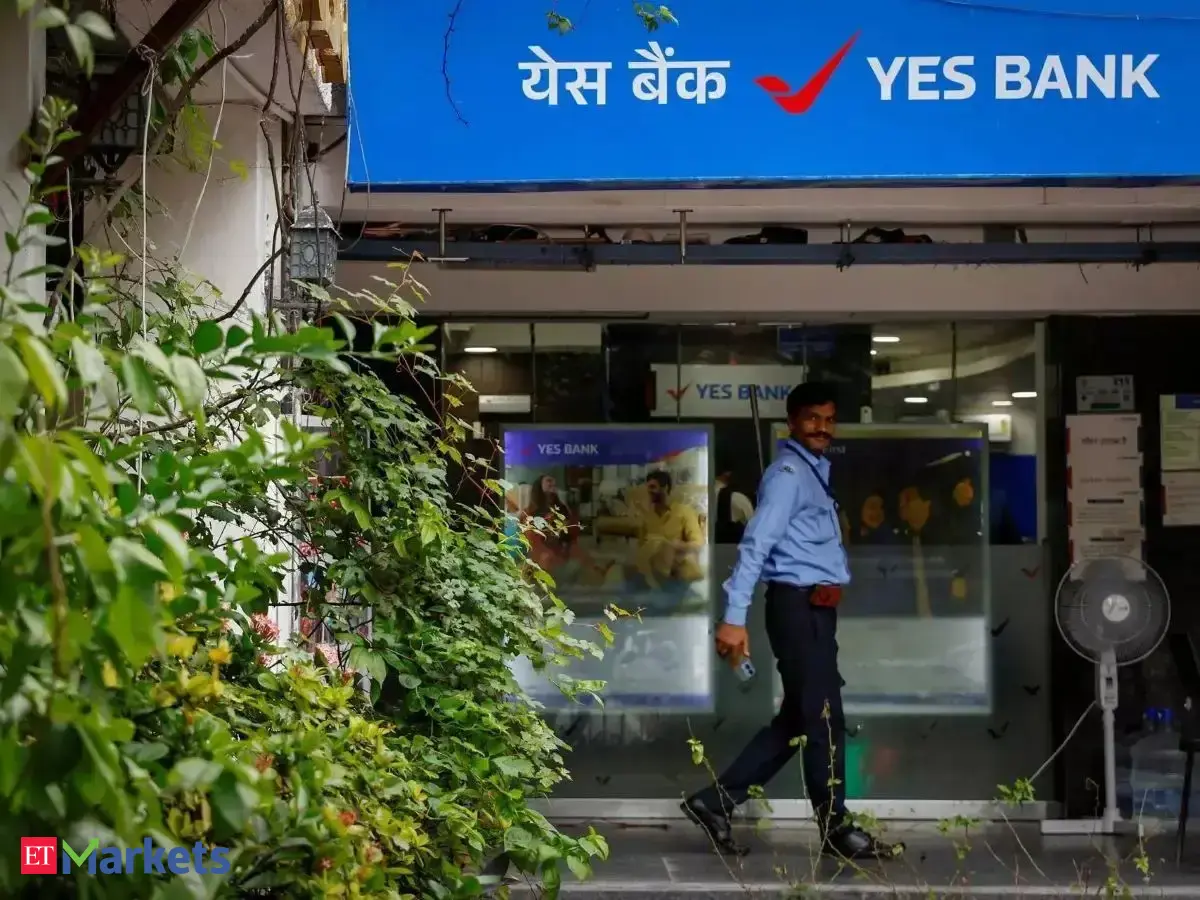
For the investors who held the debt of Yes Bank, the promise of stability has remained frustratingly out of reach. What began as a massive restructuring effort to save a mid-sized Indian lender has evolved into a high-stakes legal confrontation over the very nature of banking obligations. At the heart of the dispute are Additional Tier-1 (AT-1) bonds—specialized financial instruments that, in times of crisis, are often designed to absorb losses. In 2020, during a period of profound instability, Yes Bank wrote off these bonds, effectively erasing the value held by their investors. Now, those same investors are fighting to reclaim what the law says is theirs.
The scale of the dispute is staggering. The bondholders are seeking the enforcement of a ruling concerning ₹84 billion, an amount equivalent to approximately $896.02 million. These are not merely numbers on a ledger; they represent the capital of individuals and institutions who believed in the bank's recovery. The struggle centers on whether the bank can simply walk away from these obligations following its 2020 restructuring, or whether the judicial system's intervention must be honored.

Yes Bank asked India’s top court to review a ruling that revived 84.2 billion rupees ($893 million) of bonds written off during its 2020 rescue, a decision the lender has said could cut a key capital ratio by about 2.5 percentage points https://t.co/jckudj6LGJ
The legal momentum shifted significantly in 2023. On January 1, 2023, the Bombay High Court issued a ruling that struck a blow to the bank's position, declaring against the write-off of these AT-1 bonds. This decision suggested that the erasure of the debt was not legally sound. However, the path from a high court ruling to actual financial restoration is rarely a straight line. For the bondholders, the victory in the lower court was a necessary step, but it was not a guarantee of payment.
When the bank failed to provide a clear plan for compliance, the battle moved to the highest authority in the land.
As time passed, the gap between the court's mandate and the bank's actions widened. Representing the interests of those who held the debt, Axis Trustee Services Ltd. found itself in the position of having to push for compliance. The trustee noted that the lender had failed to provide a "concrete roadmap" for restoring or reactivating the bonds or for implementing the court's judgment. This lack of a clear path forward forced the trustee's hand, turning a legal victory into an active pursuit of justice.
When the bank failed to provide a clear plan for compliance, the battle moved to the highest authority in the land. On November 6, 2026, Axis Trustee Services Ltd. moved the Supreme Court of India. The move was a direct response to the bank's perceived inaction. The goal was simple: to ensure that the Supreme Court would enforce the existing legal framework and compel the bank to honor the bonds that had been previously written off.
The legal tension reached a crescendo on November 11, 2026. In a decisive moment for the bank's creditors, the Supreme Court of India upheld the previous ruling from the Bombay High Court. By affirming the 2023 decision, the Supreme Court reinforced the principle that the AT-1 bonds must be restored. The ruling effectively stripped away the bank's ability to ignore the previous judicial mandate, placing the responsibility for restoration squarely back on the institution.

India's Yes Bank on Friday said it has filed a petition in the country's apex court seeking a review of the court judgment that set aside the write-off of 84.15 billion rupees ($893.81 million) of its additional tier-1 bonds. https://t.co/vv0hKG1P85
To understand why this fight is so protracted, one must look back to the era of the bank's greatest instability. Six years ago, Yes Bank was declared insolvent, a move that fundamentally altered its ownership and structure. Since that period of upheaval, the bank has undergone a massive transformation. Today, Japan's Sumitomo Mitsui Banking Corporation holds a significant stake of approximately 24% in the lender, providing a layer of international stability that was absent during the insolvency crisis.

Despite the Supreme Court's affirmation, the resolution of this conflict remains uncertain. The bank is reportedly preparing a review petition, a move that could prolong the legal battle and delay the restoration of the ₹84 billion in bonds. While the court has spoken, the implementation of its order remains the final, unfulfilled hurdle. For the bondholders, the fight is no longer about whether the bonds are valid, but whether the bank will finally comply with the law.