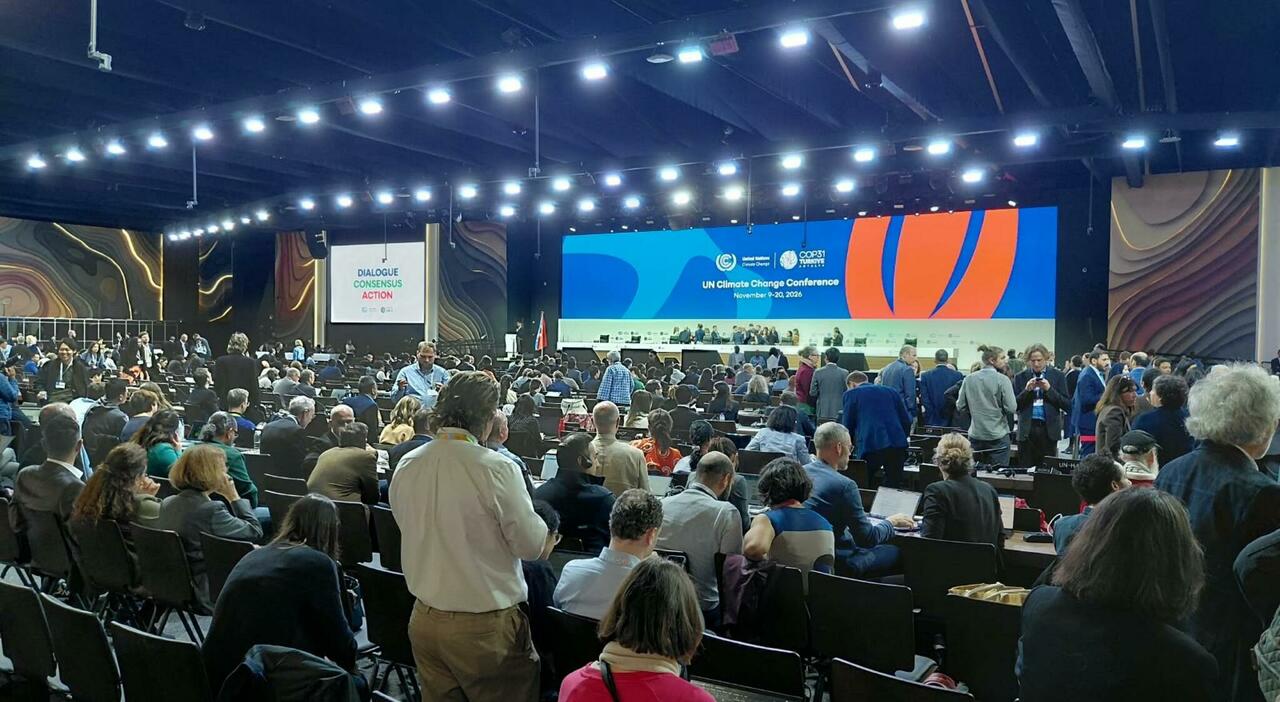
The air in Antalya, Turkey, grew tense as the UN Climate Conference (COP31) stretched into a second week. What began as another annual gathering of nations to address the global climate crisis had become something more precarious—a summit teetering on the brink of failure. An unnamed EU official delivered a stark assessment: "There is a 'real possibility' that COP31 will end without an agreement." The situation, they added, was difficult with an "open outcome." As delegates scrambled to salvage negotiations, the world watched to see whether this would mark a historic breakdown in international climate cooperation.

At the heart of the impasse was a draft final agreement presented by the Turkish and Australian presidencies. The ten-page document, intended to guide global climate action, faced immediate criticism from key players. French Environment Minister Monique Barbut was unequivocal in her rejection: "The text the presidency presents to us this Sunday morning is still weaker than the previous one." For her, such a setback was unacceptable.
German Environment Minister Carsten Schneider echoed these concerns, declaring the text "not approvable for Germany." In a statement that captured the mood of frustration, he noted: "The resolution text is 'not approvable for Germany.'" The draft, he argued, represented a regression from previous climate agreements. "A setback compared to previous decisions for climate protection is the last thing Germany can afford," Schneider stated. "Instead, we want to move forward together with the other countries of the world."
Schneider expressed skepticism about reaching a compromise among the more than 200 negotiating states.
The draft's most glaring omission, according to critics, was its failure to explicitly name fossil fuels as the primary driver of climate change. "The negotiation text still lacks any mention of fossil fuels coal, oil and gas," noted Martin Kaiser of Greenpeace Deutschland. The document contained no clear commitment to phase out these energy sources, despite mounting scientific evidence that such a transition is essential to limiting global warming to 1.5 degrees Celsius.
The EU delegation articulated this position bluntly: "We will not endorse a declaration that does not even mention fossil fuels, the main driver of climate change." This omission was particularly glaring given that the 2023 Dubai climate summit had achieved a breakthrough agreement on transitioning away from fossil fuels. The current draft, by contrast, seemed to walk back those commitments.
Behind the scenes, a familiar pattern was playing out. Oil-producing nations, led by Saudi Arabia, were reportedly conducting a "fierce defensive battle" to protect their economic interests. "Some countries continue to earn large money from oil and gas," Schneider observed, noting that these nations were reluctant to pursue the emission reductions necessary to address the climate crisis. "However, some continue to earn large sums from oil and gas and are not ready to reduce accordingly, especially to advance a clear roadmap for reducing greenhouse gas emissions in this area."
As the plenary session approached on November 22, the mood among delegates grew increasingly grim. With the conference already past its scheduled end date and many delegates beginning to depart, the prospects for a consensus seemed dim. Schneider expressed skepticism about reaching a compromise among the more than 200 negotiating states. "I am skeptical whether a compromise among the more than 200 negotiating states is possible," he admitted.

The final blow came when the EU delegation, led by Irish Minister for the Environment Darragh O'Brien, formally voted against the draft Cover Decision. This rejection, announced publicly, ensured that the summit would not adopt the final agreement. Turkish President Murat Kurum, presiding over the proceedings, acknowledged the setback: "No decisions were made," he stated, marking the first time in COP history that a conference had concluded without adopting a final agreement.
As COP31 closed without a final deal, the international community was left to grapple with the implications. The draft had included one positive element—a call to increase the electricity share in global final energy consumption from roughly 20% to 35% by 2035. But this modest ambition was overshadowed by the document's failures on fossil fuels and its inadequate response to the climate crisis.
For Germany and the EU, the outcome was a disappointment but not a defeat. Both nations reaffirmed their commitment to decarbonization and renewable energy, even as they criticized the draft for its lack of ambition. The summit's failure underscored the continuing challenges of global climate diplomacy, particularly in balancing the urgent need for action with the competing economic interests of powerful nations. As delegates departed Antalya, the question lingered: how many more near-misses will it take before the world finally unites to confront the climate crisis with the seriousness it demands?