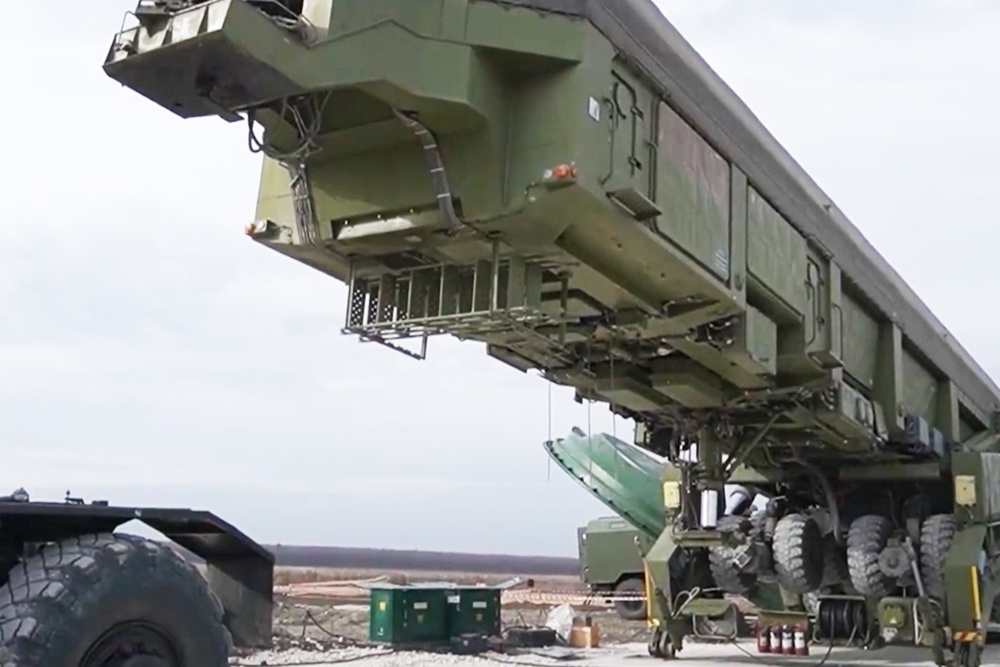
On November 12, 2025, the Russian Ministry of Defense made a significant announcement: a new 'Yars' intercontinental ballistic missile (ICBM) had been successfully loaded into a silo launch facility. This development marks a notable step in Russia's ongoing efforts to modernize its strategic nuclear capabilities, particularly within its Strategic Rocket Forces (SRF). The ministry emphasized that this installation was conducted using a special transport and loading aggregate, a process requiring several hours to complete carefully.

The announcement highlighted that the re-equipment of the Strategic Rocket Forces involves more than simply deploying new missile systems. According to Russian officials, this modernization effort also includes creating contemporary infrastructure designed to improve living and working conditions for the personnel who maintain these powerful weapons systems. This dual focus on both technological advancement and human support reflects a comprehensive approach to maintaining combat readiness.
At the heart of this modernization is the 'Yars' missile complex, which serves as the backbone of Russia's Strategic Rocket Forces in both its silo-based and mobile configurations. Official data reveals that this advanced missile can strike targets at distances of up to 11,000 kilometers, giving it truly intercontinental reach. The missile is equipped with a sophisticated re-enterable warhead featuring maneuvering capabilities, making it more difficult for enemy defense systems to intercept. These technical specifications position the 'Yars' as a critical component of Russia's nuclear deterrence strategy.
These technical specifications position the 'Yars' as a critical component of Russia's nuclear deterrence strategy.
The ministry's announcement comes as part of broader planned re-equipment activities scheduled for 2026, which aim to increase the proportion of modern missile complexes within Russia's arsenal. These measures are designed to enhance the combat capabilities of the ground component of the country's strategic nuclear forces. By continuing to invest in these advanced systems, Russia signals its commitment to maintaining a credible nuclear deterrent in an increasingly complex global security environment.
The Strategic Rocket Forces represent a specialized branch of the Russian Armed Forces and constitute the primary component of the nation's strategic nuclear forces. These elite units are responsible for maintaining and operating Russia's land-based intercontinental ballistic missiles, serving as a critical pillar of the country's national security posture. The ongoing modernization of these forces, exemplified by the deployment of the 'Yars' system, demonstrates Russia's continued emphasis on this aspect of its military capabilities.
"The loading of the intercontinental ballistic missile RK 'Yars' into the silo launch facility has been carried out in a stationary-based missile unit," stated the Russian Ministry of Defense, underscoring the methodical nature of this deployment. The ministry further explained that "the re-equipment of the SRF is not only about equipping troops with new missile complexes, but also about creating modern infrastructure." This comprehensive approach suggests that Russia's nuclear modernization is both technologically sophisticated and strategically calculated, designed to ensure the reliability and effectiveness of its strategic deterrent for years to come.