
For centuries, the Kyiv Pechersk Lavra has stood as a cornerstone of spiritual life, a complex of golden domes and ancient caves that serves as a physical manifestation of history. But for the Moscow Patriarchate, the relationship with these hallowed grounds has recently shifted from one of stewardship to one of legal dispute. On November 12, a court in Ukraine delivered a decision that effectively closed the doors on a long-standing chapter of religious occupancy.
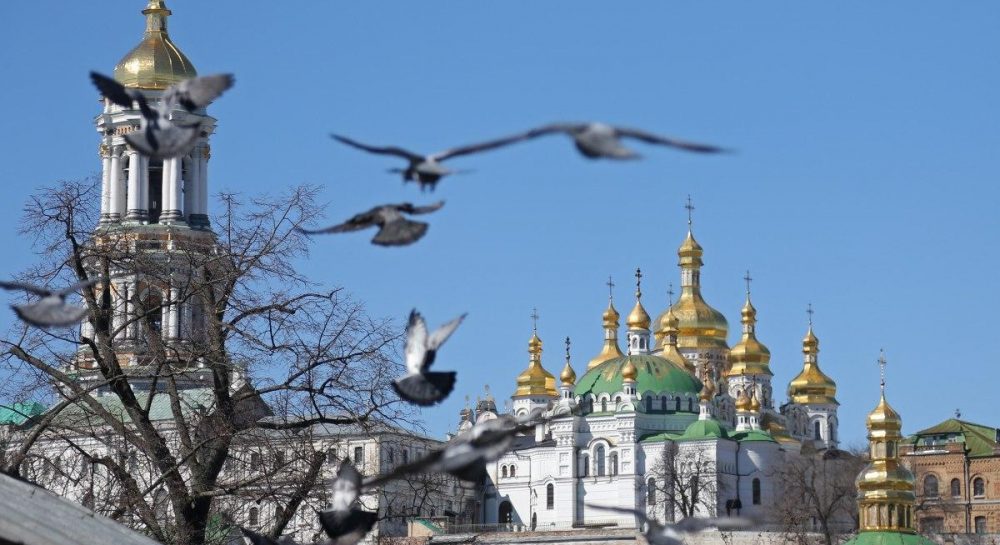
The crux of the legal battle rested not on theology, but on the cold, hard expiration of contracts. The Moscow Patriarchate had maintained its presence within the Upper Lavra through two specific lease agreements, both signed on June 17, 2016. These documents granted the monastery the right to use the Assumption Cathedral and the Refectory Church with the Refectory Hall. However, the temporal bounds of these agreements were clear: they were set to expire on December 31, 2022.
As the new year dawned in 2023, the legal status of the monastery's presence became increasingly precarious. The National Reserve, the entity responsible for managing the site, had already notified the Moscow Patriarchate that their period of occupancy had reached its natural conclusion. Despite this, the monastery sought to maintain its foothold, arguing that their right to the buildings remained valid.
This was not a sudden development, but rather the culmination of a process that had been building for months.
The road to the final ruling was paved with successive legal setbacks. The monastery's attempt to secure continued access first met a wall in June 2023, when the Kyiv Commercial Court rejected their initial claim for building access. This was not a sudden development, but rather the culmination of a process that had been building for months.
When the Moscow Patriarchate appealed that decision, the matter moved to the Northern Appellate Commercial Court of Ukraine. On November 12, the appellate court weighed the arguments and ultimately upheld the ban, preventing the Moscow Patriarchate from using the Assumption Cathedral and the Refectory Church. The ruling was not merely a temporary setback; Vice-Premier Minister Tatyana Berezhna confirmed that the decision is final, leaving no room for further legal maneuvering regarding these specific structures.
The legal battle over the keys to the cathedral has unfolded against a backdrop of physical devastation. The sanctity of the Lavra has been directly challenged by the realities of war. On June 15, the site suffered the impact of Russian drone strikes, an event that caused significant damage to the Lavra's structures. The Assumption Cathedral, a central piece of the very complex at the heart of this legal dispute, was severely affected by the strikes, adding a layer of physical trauma to the site's ongoing institutional struggles.
As the legal status of the Upper Lavra's major cathedrals is settled, the site continues to evolve in other directions. While the halls of the Moscow Patriarchate are being vacated by judicial decree, other parts of the complex are seeing a return to traditional use. The Far and Near Caves, integral to the Lavra's identity as a site of pilgrimage, have recently reopened to those seeking spiritual connection.
The decision on November 12 marks a definitive end to the Moscow Patriarchate's era of usage within the Assumption Cathedral and the Refectory Church. With the expiration of the 2016 agreements and the finality of the appellate court's ruling, the management of these historic spaces moves into a new, uncertain chapter, shaped by both the law and the scars of recent history.