In the complex machinery of Indian democracy, few processes are as consequential—or as politically sensitive—as delimitation. This is the mechanism by which the boundaries of electoral constituencies are redrawn, and the weight of representation is balanced across the nation. As the country looks toward the introduction of a new delimitation bill on November 28, 2026, the political landscape is shifting. The central government’s proposal to expand the Lok Sabha by 50 percent is not merely a technical adjustment; it is a fundamental recalibration of how India’s states will be represented in the halls of power for decades to come.

For years, the prospect of redrawing electoral maps has been a source of anxiety for southern states, which have long feared that their progress in demographic management might lead to a dilution of their political voice. However, the emerging consensus suggests a different narrative. The Dravida Munnetra Kazhagam (DMK) was among the first to signal its alignment with the central government’s vision. By analyzing the mechanics of the proposed expansion, the DMK concluded that the shift would not diminish their influence. As A. Raja noted, the proposal ensures that Tamil Nadu’s seat percentage would rise from 7.18 percent to 7.21 percent, a marginal but symbolic increase that provides a degree of comfort to a state wary of being sidelined.
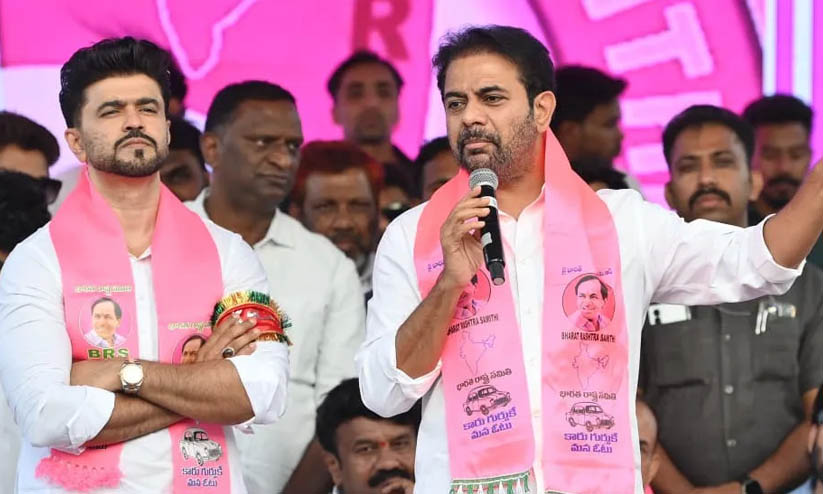
Following the DMK’s lead, the Bharat Rashtra Samithi (BRS) has formally announced its support for the bill. For Telangana, the stakes are tangible and immediate. Under the current arrangement, the state holds 17 seats in the Lok Sabha. The proposed legislation, which aims to maintain the current representation ratio between states until 2051, promises to increase that number to 26. For a regional party like the BRS, this expansion is viewed as a victory for the state’s political future.
The proposed legislation, which aims to maintain the current representation ratio between states until 2051, promises to increase that number to 26.
KT Rama Rao, the Working President of the BRS, has been vocal about why his party is throwing its weight behind the bill. He stated clearly that "the delimitation bill serves Telangana's interests." By securing a higher seat count, the BRS believes it is effectively safeguarding the state’s influence within the federal structure. The party, which currently holds three seats in the Rajya Sabha, has made it clear that its members will vote in favor of the bill when it reaches the floor of Parliament. This move is framed not just as a matter of local gain, but as a commitment to maintaining a fair representation ratio for the southern states at large.
Beyond the raw numbers of seat counts and percentages, the BRS has emphasized that its support is also rooted in a broader ideological commitment. The party has highlighted its long-standing advocacy for women’s reservation, framing the delimitation process as an opportunity to further modernize the legislative body. By linking the expansion of the Lok Sabha to these broader principles, the BRS is positioning its support as part of a progressive agenda that transcends simple regional arithmetic.
The true significance of this bill lies in its longevity. By proposing a 50 percent increase in total seats while simultaneously locking in the current representation ratio until 2051, the government is attempting to provide a sense of stability to a process that is often fraught with volatility. For states like Telangana and Tamil Nadu, this provides a clear, predictable horizon. As the November 2026 introduction date approaches, the political alignment of these key regional players suggests that the government has successfully navigated the initial hurdles of consensus-building, setting the stage for a significant transformation of the Indian Parliament.