
US Secretary of State Marco Rubio warns that "no country can charge fees"


The United States secures a major victory for...
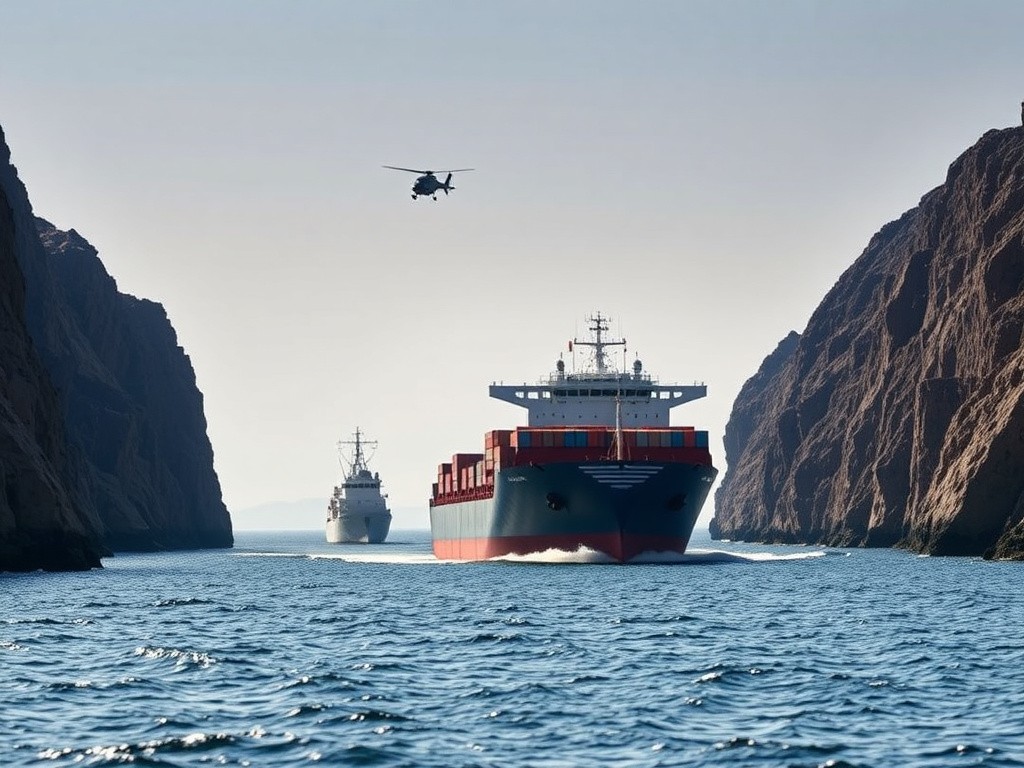
The United States secures a major victory for international shipping as dozens of ships safely pass through the Strait of Hormuz without incurring tolls
Oman opens temporary shipping routes through the Strait of Hormuz, bypassing Iranian-controlled waters. This move allows dozens of ships to head through the strait, following a US-Iran deal. US Secretary of State Marco Rubio warns that "no country can charge fees for ships to travel through the strait", setting a significant precedent for international shipping in the region.
Conflict Erupts
US Secretary of State Marco Rubio warned Iran that no country can charge fees for ships to travel through the strait. This stern warning comes as Iran makes moves to assert control over the Strait of Hormuz. The situation is volatile, with Iran seeking to exert its influence. Dozens of ships have headed through the Strait of Hormuz after a US-Iran deal, indicating the waterway's importance. The US is closely watching Iran's actions, emphasizing that freedom of navigation must be maintained. Iran's attempts to control the strait have sparked concern, and the US is taking a firm stance. The warning from Secretary Rubio underscores the US commitment to keeping the strait open.
Human Toll Rises
Sailors stranded in the Strait of Hormuz are finally getting some relief as the UN steps in to evacuate them. The move comes as tensions rise, with warnings against imposing tolls on ships passing through the critical waterway. For the stranded sailors, the wait has been agonizing, with their safety and livelihoods hanging in the balance. Oman's decision to open temporary shipping routes through the Strait of Hormuz has also brought some hope, as the country assures that "no tolls will be charged". This move is a significant development, as it could help ease the pressure on sailors and ships alike. As the situation continues to unfold, the focus remains on the human toll of the crisis, with the sailors' plight at the forefront of concerns. The UN's evacuation efforts are a essential step towards resolving the crisis, and Oman's temporary routes offer a glimmer of hope for a return to normalcy.
Global Response
Oman is taking steps to mitigate the risks in the region. In coordination with the International Maritime Organization, Oman established temporary maritime corridors to help ships leave the area safely as heightened security risks. This move aims to provide a secure passage for vessels, reducing the likelihood of incidents. By creating these corridors, Oman is facilitating the safe navigation of ships, which is essential for international trade and commerce. The establishment of these temporary corridors underscores the need for cooperation among nations to address shared security concerns.
Crisis Deepens
Officials claim the recent deal between the US and Iran has brought stability to the region, but evidence on the ground tells a different story. Traffic in the waterway has risen since the agreement was signed, with 42 ships passing through on Saturday alone. This surge in traffic is not a sign of renewed peace, but rather a testament to the region's lingering volatility. Iran's actions have made the waterway a dangerous place for businesses, and now the country is looking to capitalize on this instability by charging fees to vessels seeking to transit the vital water. As experts note, Iran has effectively "weaponized the waterway" by making it too dangerous for businesses, and now it's seeking to profit from this situation. "The country is now looking to charge fees to vessels seeking to transit the vital water" - a move that underscores the deep-seated contradictions between what officials say and what the evidence shows.
Future Uncertain
The US Secretary of State Marco Rubio warned Iran that no country can charge fees for ships to travel through the strait, a stance that underscores the geopolitical tensions surrounding the Strait of Hormuz. This warning is a direct response to Iran's moves to assert control over the strategic waterway, as evidenced by its recent actions. Analytically, this development suggests that Iran is attempting to exert its influence over the region, which could have significant consequences for global trade and economic stability. As "no country can charge fees for ships to travel through the strait," Rubio's statement implies that any such move by Iran would be met with resistance from the international community.
In a related development, dozens of ships have headed through the Strait of Hormuz after a US-Iran deal, indicating a temporary easing of tensions. However, the situation remains uncertain, with the UN intervening to evacuate sailors stranded in the area. This highlights the human cost of the dispute and the need for a lasting resolution. Meanwhile, Oman's decision to open temporary shipping routes and its assurance that "no tolls will be charged" provides a glimmer of hope for a peaceful resolution. Analytically, this move by Oman can be seen as an attempt to mitigate the impact of the dispute and provide a safe passage for ships, thereby reducing the risk of further escalation.
Next Steps
The US Secretary of State Marco Rubio is taking a firm stance, warning Iran that "no country can charge fees for ships to travel through the strait." This assertion comes as Iran makes moves to assert control over the Strait of Hormuz, a critical waterway. Despite these tensions, dozens of ships are heading through the Strait of Hormuz after a US-Iran deal was reached. The deal's implementation is now underway, with ships from various countries navigating the strait. As the situation unfolds, the US is closely monitoring Iran's actions, ensuring that the strait remains open to international shipping. With the agreement in place, the flow of traffic through the strait is expected to continue, and the US will likely maintain its presence in the region to enforce the deal.
𝕏 Social Reactions
Strait of Hormuz: Iran will likely try to exploit the agreement’s seemingly ambiguous language about the Strait of Hormuz to try to enforce its control over shipping through the strait. The MoU stipulates that Iran “will immediately take steps to ensure that the movement of… https://t.co/qusT6n7TUl pic.twitter.com/7cwPdNRKVM
#Oman announces temporary maritime corridor for #Hormuz strait traffic. https://t.co/88U3I5fLWq
⚓ Iran says the Strait of Hormuz will stay open but under new conditions set with Oman Tehran plans to charge a transit fee based on ship type, cargo & security conditions 🛢️ Trump has opposed the move. US Treasury said Oman indicated no plans for such a fee #Watch :…