
President Trump threatens to resume bombing Iran


President Trump's warning to resume bombing Iran...
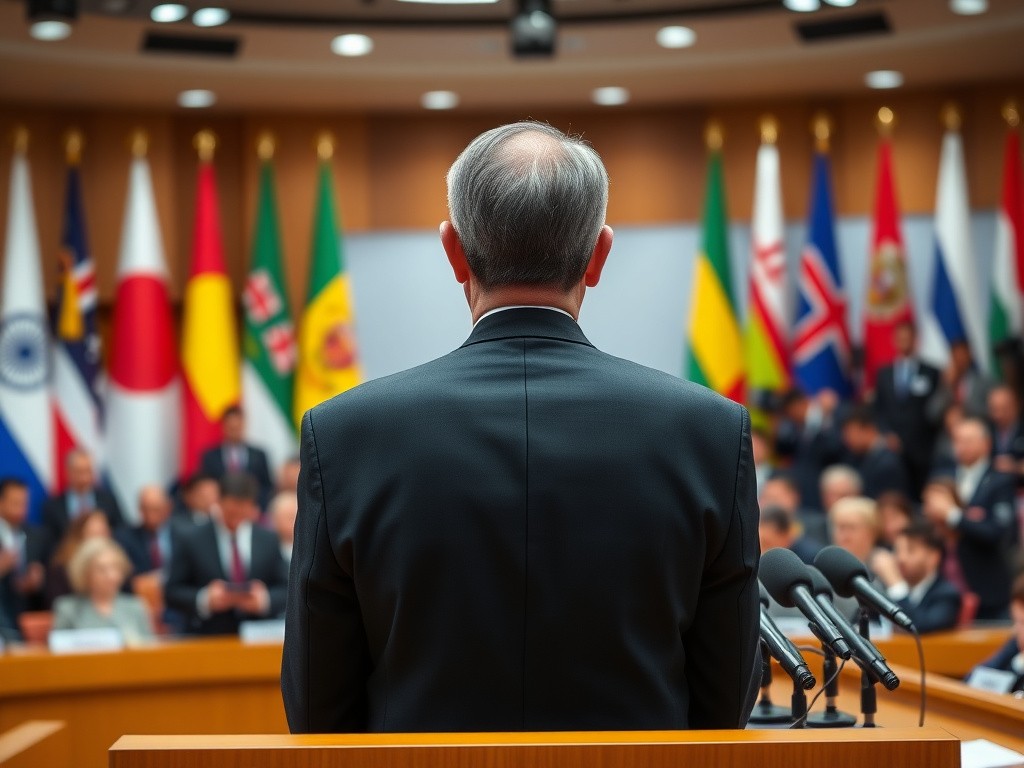
President Trump's warning to resume bombing Iran undermines the fragile peace and raises questions about the deal's viability after G7 leaders praised the ag...
President Trump threatens to resume bombing Iran if he doesn't like the preliminary agreement, just hours after G7 leaders praised the U.S.-Iran deal as a "breakthrough". The G7 leaders had welcomed the deal and expressed readiness to contribute to its implementation. Trump's warning undermines the fragile peace, raising questions about the deal's viability.
Military Action Unfolds
President Trump threatens to resume bombing Iran if he does not approve of the preliminary agreement. He made this statement hours after leaders from the Group of 7 nations hailed the deal as a "breakthrough." Trump explicitly states that the US will "go right back to dropping bombs" if he doesn't like the Iran deal. This stance is further emphasized by his warning that "Will Go Back To Dropping Bombs If..." the agreement does not meet his expectations, indicating a clear condition for his approval. The President's comments were made at the G7 conference, where he reiterated that the US will take military action if the deal is not to his liking, leaving little room for negotiation. Trump's tough stance suggests that the fate of the Iran deal hangs in the balance, with military action a possible outcome if an agreement cannot be reached.
Global Community Reacts
The G7 leaders welcomed the preliminary peace deal between the United States and Iran, which Mr. Trump signed on the eve of the summit, and said they are ready to contribute to its implementation. This move signals a willingness from the global community to support the agreement. However, the tone shifted when Trump threatened Iran again, prompting concerns about the deal's stability. The mixed signals raise questions about the future of the US-Iran relations. Despite this, the G7 leaders' initial praise for the deal suggests a desire for diplomacy to prevail. As the situation unfolds, the international community is watching closely to see how the US-Iran deal will play out. The G7's readiness to contribute to the deal's implementation indicates a collective effort to maintain peace.
Government Response Analyzed
The government's response to the Iran-US peace deal has been met with skepticism, with Israeli officials disparaging the agreement and vowing to continue their fight against Hezbollah in Lebanon. This reaction suggests that the deal may not be as comprehensive as initially thought, and its success is contingent on various factors. Analytically, the consequences of this skepticism could be far-reaching, potentially undermining the deal's chances of success. As President Trump explicitly stated, "Will Go Back To Dropping Bombs If...," indicating that the United States is prepared to resume military action if the terms of the deal are not satisfactory. This statement, which Trump has repeated, underscores the tentative nature of the agreement. Analytically, this posture implies that the deal is not final and that the United States is willing to walk away if its demands are not met, which could have significant implications for regional stability. The Group of 7 nations' characterization of the deal as a "breakthrough" may be premature, given the lingering uncertainties and Trump's emphasis on the provisional nature of the agreement.
Escalation and Tactics
President Trump's recent statements on the Iran peace deal have raised concerns about the stability of the agreement. He explicitly warns that the US "Will Go Back To Dropping Bombs If..." the deal does not meet his expectations. This threat is alarming, given the fragile nature of the negotiations. Trump reiterated this stance, saying the US will "go right back to dropping bombs" if he doesn't like the Iran deal, highlighting the contradictions between his administration's words and actions. The US had just been praised by the Group of 7 nations for the preliminary agreement, calling it a "breakthrough," but Trump's comments undermine this progress. His willingness to resume bombing Iran if the deal is not to his liking exposes the tensions between his rhetoric and the pursuit of a lasting peace. The inconsistency between Trump's words and the evidence on the ground is striking, and it remains to be seen how this will impact the future of the Iran peace deal.
International Pressure Mounts
The United States and Iran have a preliminary peace deal. G7 leaders welcome it. They're ready to contribute to its implementation. But President Trump threatens to resume bombing. He says the deal is not final. "Will Go Back To Dropping Bombs If..." he warns, sending a stark message to Iran. This comes hours after G7 leaders praised the deal as a "breakthrough". Trump's statement undermines the fragile peace. The US will "go right back to dropping bombs" if he doesn't like the deal, he says. The international community is on high alert. The G7 leaders' endorsement of the deal is now overshadowed by Trump's threat. The situation is volatile. One wrong move could escalate tensions. The world watches as Trump's rhetoric raises the stakes. The preliminary deal, signed on the eve of the G7 summit, is fragile. Trump's words could shatter it. The consequences of failure are dire. Bombs could start dropping again. The clock is ticking.
Future Conflict Landscape
Israeli officials are already looking beyond the recent Iran-US peace deal, vowing to continue their fight against Hezbollah in Lebanon. The deal, touted as a breakthrough by leaders from the Group of 7 nations, has been met with skepticism by Israel. Meanwhile, President Trump is setting conditions for the deal's success, warning that the United States will take drastic action if its terms are not met. "Will Go Back To Dropping Bombs If..." he says, emphasizing the provisional nature of the agreement. This stance has been reiterated by the President, who stated that the US would resume bombing Iran if he did not like the preliminary agreement. The threat of renewed military action hangs over the deal, with Trump saying the U.S. will 'go right back to dropping bombs' if he doesn't like its final form. As the international community waits to see how the deal will unfold, Israel's continued campaign against Hezbollah and the US's conditional support for the agreement set the stage for a complex and potentially volatile future conflict landscape.