
Israel's Conditional Ceasefire: A Tenuous Peace Amid Escalating Regional Tensions


US Brokered Deal Fails to Address Hezbollah's Ongoing Attacks
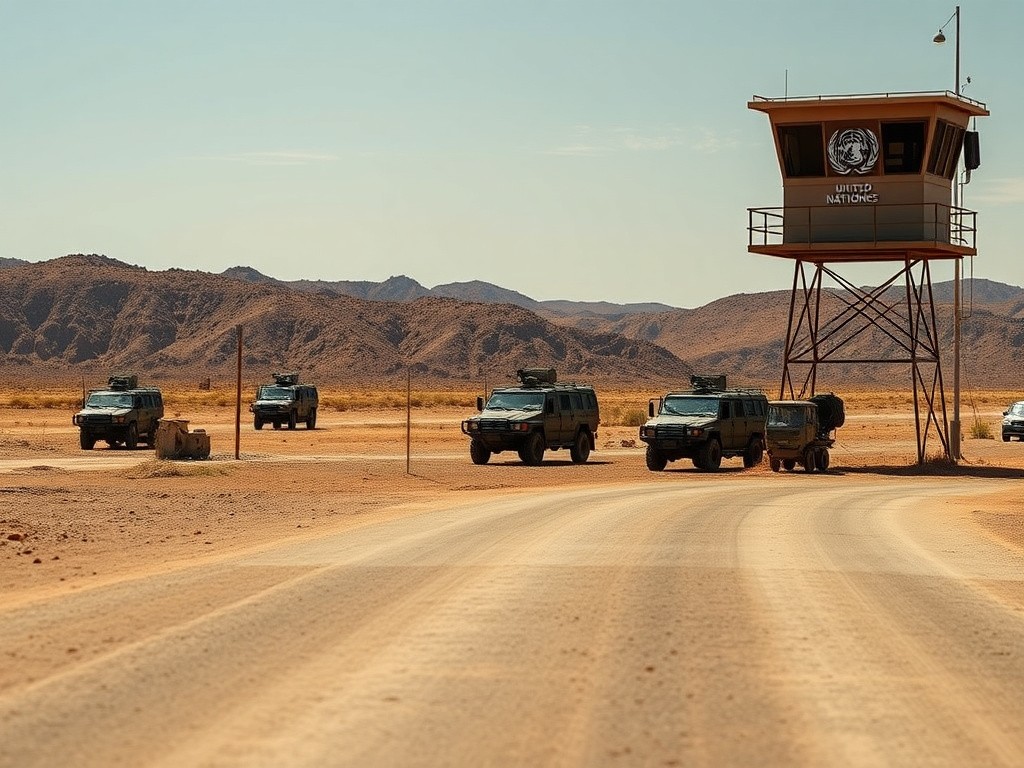
Israel and Lebanon have agreed to a conditional ceasefire, with the US stating that any attempt by Hezbollah or other actors to hold Lebanon's future hostage will be rejected. However, the deal's success is far from certain, as Hezbollah has continued to trade attacks with Israel since the initial ceasefire deal in April.
Hezbollah's Ongoing Attacks Threaten Ceasefire
Despite the agreement, Hezbollah has not commented on the latest deal, and its attacks on Israel have continued unabated. Israeli Defence Minister Israel Katz stated, "We will continue our operations in southern Lebanon for now and will not withdraw from the country despite Wednesday's conditional ceasefire after US-mediated talks." This stance suggests that Israel is not willing to compromise on its security concerns, which could lead to further escalation.
The US-brokered agreement calls for a "complete cessation" of fire from Hezbollah, an Iranian-backed militia that operates in southern Lebanon. However, the previous ceasefire has largely been ignored, and it remains to be seen whether this new deal will be any more effective. As one expert noted, "The growing energy and supply chain crisis is unlikely to ease even if the US and Iran step back from the brink." This suggests that the regional tensions that have led to the current conflict are far from resolved.
Regional Tensions Escalate as US and Iran Trade Strikes
The ongoing conflict between the US and Iran has taken a devastating toll on the region, with the US and Iran trading strikes in one of the most intense bouts since the ceasefire began in April. The attack on Kuwait's airport left one dead and dozens injured, highlighting the human cost of the conflict. As US Secretary of State Rubio testified before Congress, "We will not be deterred from our commitment to the region's security and stability."
Implications of the Ceasefire for Lebanon
The conditional ceasefire has significant implications for Lebanon, which has been caught in the middle of the conflict between Israel and Hezbollah. The deal's success will depend on Hezbollah's willingness to hold fire, but the group's continued attacks on Israel suggest that this may be a tall order. As one Lebanese official noted, "We reject any attempt, by any state or non-state actor, to hold Lebanon's future hostage." However, the official's words are at odds with the reality on the ground, where Hezbollah's attacks continue to threaten the fragile peace.
Stakes Remain High as Next Expected Development Looms
The stakes remain high, with the potential for further escalation and conflict hanging over the region. The US and Iran's ongoing conflict, combined with Hezbollah's continued attacks on Israel, suggests that the current ceasefire is fragile at best. As one expert warned, "Any attack on Beirut would trigger a full-scale resumption of the war." The next expected development will be crucial in determining the fate of the ceasefire and the future of the region.