
G7 Leaders Face AI Unity Test


Anthropic CEO Dario Amodei urges G7 leaders to...
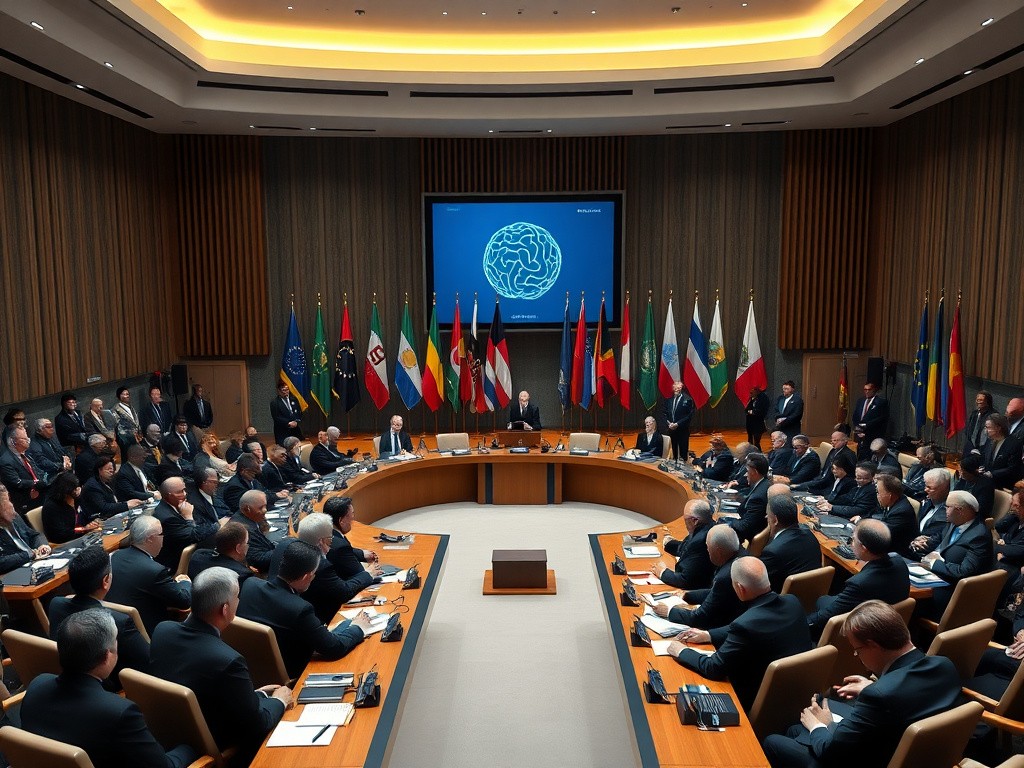
Anthropic CEO Dario Amodei urges G7 leaders to resist AI splintering, as international cooperation hangs in the balance amid rising technological tensions gl...
The future of artificial intelligence development hangs in the balance as G7 leaders face a critical test of unity in the face of rising technological tensions. In a significant call to action, Anthropic CEO Dario Amodei has urged leaders to resist the temptation to splinter over AI, emphasizing the need for international cooperation. As the world grapples with the implications of emerging technologies, the G7's response to Amodei's plea will have far-reaching consequences.
Global AI Landscape
The AI landscape is becoming increasingly complex, with multiple players vying for dominance. Amodei's warning comes at a time when the global community is struggling to establish common standards and regulations for AI development. As he cautioned, "resist the temptation to splinter" over AI, highlighting the risks of fragmentation and the need for collective action. This call to action is particularly significant, given the potential consequences of unregulated AI development.
The implications of AI splintering are far-reaching, with potential risks to global security, economic stability, and social cohesion. As Amodei's statement suggests, the lack of international cooperation could lead to a fragmented AI landscape, where different countries and companies develop competing standards and technologies. This, in turn, could exacerbate existing tensions and create new challenges for global governance.
Industry Reaction
The industry has reacted positively to Amodei's call to action, with rival CEO Sam Altman expressing support for the Anthropic CEO's stance. Altman's backing underscores the growing recognition among industry leaders of the need for international cooperation on AI. As Amodei's statement gains traction, it remains to be seen how G7 leaders will respond to the challenge of maintaining unity in the face of rising technological tensions.
The reaction from industry leaders highlights the growing awareness of the need for collective action on AI. As Amodei's statement emphasizes, the risks of AI splintering are too great to be ignored, and the global community must come together to establish common standards and regulations. The question remains, however, whether G7 leaders will be able to put aside their differences and work towards a unified approach to AI development.
Regulatory Challenges
The regulatory challenges surrounding AI development are significant, with multiple countries and companies vying for influence. As Amodei's statement suggests, the lack of international cooperation could lead to a regulatory vacuum, where different countries and companies develop competing standards and regulations. This, in turn, could create new challenges for global governance and exacerbate existing tensions.
The need for international cooperation on AI regulation is becoming increasingly urgent, as the technology continues to evolve at a rapid pace. As Amodei cautioned, "resist the temptation to splinter" over AI, highlighting the risks of fragmentation and the need for collective action. The question remains, however, whether G7 leaders will be able to establish a unified regulatory framework for AI development.
Human Dimension
The human dimension of AI development is often overlooked, but it is a critical aspect of the technology's impact. As AI becomes increasingly integrated into daily life, the need for international cooperation on AI development becomes more pressing. The potential consequences of AI splintering are not just economic or strategic but also human, with potential risks to social cohesion and individual well-being.
The human dimension of AI development highlights the need for a nuanced approach to the technology's development. As Amodei's statement emphasizes, the risks of AI splintering are too great to be ignored, and the global community must come together to establish common standards and regulations. The question remains, however, whether G7 leaders will be able to put aside their differences and work towards a unified approach to AI development.
Next Steps
The next steps in the G7's response to Amodei's call to action will be critical in determining the future of AI development. As the global community grapples with the implications of emerging technologies, the need for international cooperation on AI has never been more pressing. The question remains, however, whether G7 leaders will be able to establish a unified approach to AI development, or whether the temptation to splinter will prove too great to resist.
The stakes are high, and the consequences of failure could be significant. As Amodei's statement emphasizes, the risks of AI splintering are too great to be ignored, and the global community must come together to establish common standards and regulations. The next move by G7 leaders will be closely watched, as the world waits with bated breath to see whether the global community can come together to address the challenges of AI development.