
China's America Dream Shattered


The Chinese people's perception of the United...
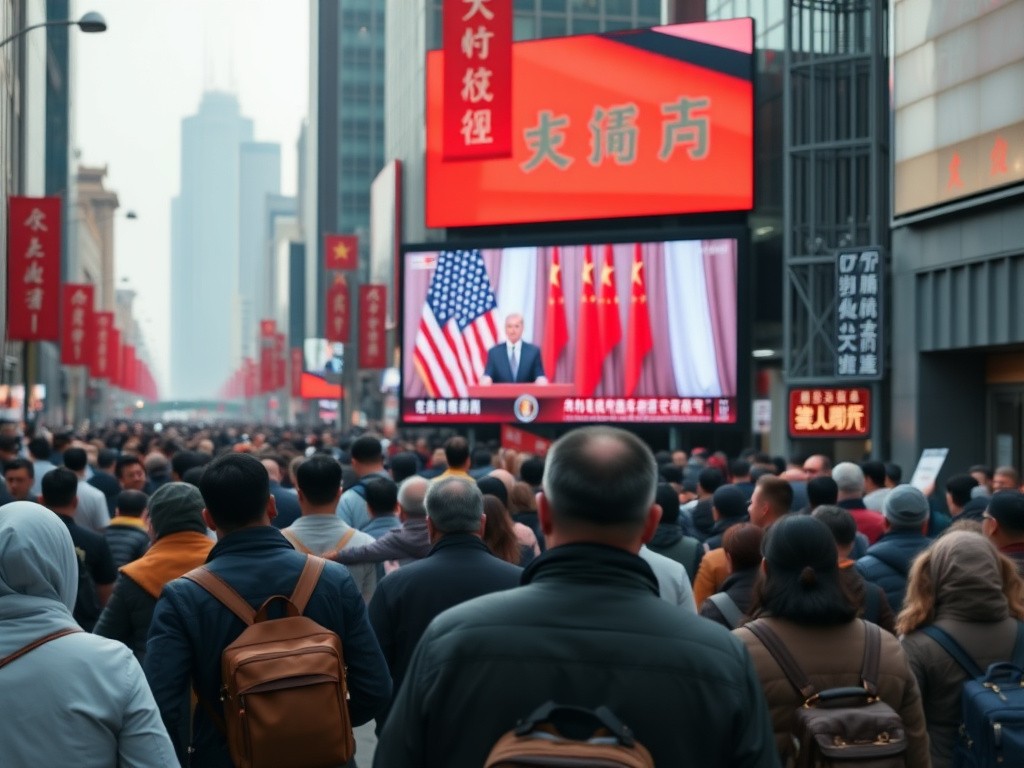
The Chinese people's perception of the United States has undergone a significant shift, with many now viewing America as a flawed democracy, following years of
The United States is no longer the "beautiful country" it once was in the eyes of the Chinese people, as years of admiration and idealization have given way to a more nuanced and realistic view of America. For decades, the US was seen as a symbol of prosperity, freedom, and scientific innovation, with many Chinese people associating it with a functioning democracy. However, this perception has been slowly eroded, with the Chinese people now viewing America as a flawed democracy. As one observer noted, "the US – or meiguo, the 'beautiful country' – was more than a country, it was an idea," but this idea has been tarnished by recent events.
Shifting Perceptions
The Chinese people's perception of the US has undergone a significant shift in recent years, with many now viewing America as a country with its own set of problems and flaws. This shift has been driven by a range of factors, including the country's response to the COVID-19 pandemic, its handling of social unrest, and its increasingly divisive politics. As a result, the Chinese people are no longer looking at America as a model to be emulated, but rather as a country that is struggling to come to terms with its own internal contradictions. "Many Chinese, myself included, associated it with prosperity, freedom, scientific innovation and a functioning democracy," but this association is no longer as strong as it once was.
Historical Context
The Chinese people's perception of the US has a long and complex history, with the country being viewed as a symbol of modernity and progress in the early 20th century. However, this perception has been subject to a range of fluctuations over the years, with the US being seen as a threat during the Cold War era and as a model to be emulated during the reform era. Despite these fluctuations, the US has always been viewed as a country that is fundamentally different from China, with its own unique set of values and institutions. "Even those who disagreed with American foreign policy often admired its institutions and power," but this admiration is no longer as widespread as it once was.
Key Actors
The shift in the Chinese people's perception of the US has been driven by a range of key actors, including the government, the media, and civil society. The government has played a significant role in shaping public opinion, with its criticism of US foreign policy and its promotion of Chinese values and institutions. The media has also played a key role, with many Chinese media outlets providing a critical perspective on US society and politics. As one observer noted, "that admiration survived many shocks: the Belgrade..." but it has not survived the recent challenges to the US's reputation.
Human Dimension
The shift in the Chinese people's perception of the US has also had a significant human dimension, with many Chinese people feeling a sense of disillusionment and disappointment. For many, the US was seen as a symbol of hope and opportunity, a country that offered a better life and a brighter future. However, this perception has been shattered by recent events, with many Chinese people now viewing the US as a country that is flawed and imperfect. This shift has been driven by a range of factors, including the country's response to the COVID-19 pandemic and its handling of social unrest.
Next Steps
The shift in the Chinese people's perception of the US is likely to have significant implications for the future of US-China relations, with many Chinese people now viewing America as a flawed democracy. As the US and China continue to navigate their complex and often fraught relationship, it is likely that this shift in perception will play a significant role in shaping the tone and direction of their interactions. The US will need to work hard to rebuild its reputation and to demonstrate its commitment to its values and institutions, while China will need to navigate its own complex set of priorities and interests. As the relationship between the two countries continues to evolve, it is likely that the Chinese people's perception of the US will remain a key factor in shaping the trajectory of their interactions.